IP Ownership When Outsourcing Jewelry CAD
Paying a CAD designer doesn't transfer the rights, so here's what does.
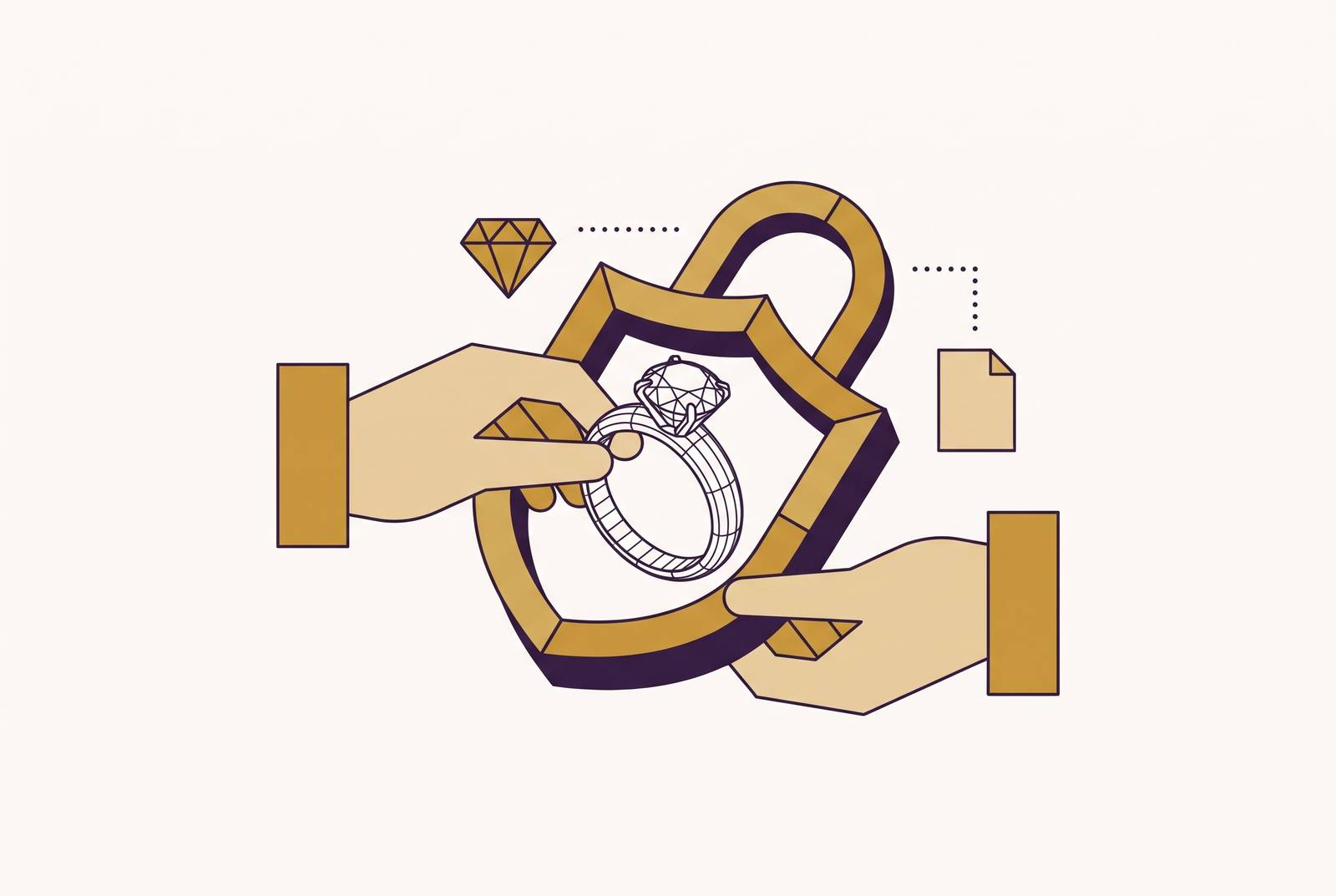
Outsourcing jewelry CAD buys design work. A brand gains control through clear assignments, separate terms for tooling, and records that show who made each asset and transferred it. The invoice proves payment. It does not turn the design, technical files, and molds into brand property, however confidently they appear in the launch plan.
Why paying for outsourced CAD work does not automatically transfer ownership of the design
A brand pays a freelancer, receives the finished CAD files, and sends them into production. Later, it discovers that it cannot necessarily stop the designer from reusing the geometry elsewhere. The files arrived, but the rights did not. What looked like a completed purchase was a service transaction with an ownership question left open.
In most major jurisdictions, the person who creates an original work generally keeps copyright unless an agreement or a legal rule that applies says otherwise. Paying for the work does not by itself transfer that copyright, nor does emailing the finished file. Possessing the file and owning the rights in it are different things.
In jurisdictions with work-made-for-hire rules, work-made-for-hire language for independent contractors requires both a signed written agreement and work that falls within the narrow categories set out in law, where jewelry CAD does not fit neatly. The label cannot do the job by itself. In the UK, an explicit IP assignment is likewise needed to transfer the designer’s rights. Cross-border outsourcing makes this distinction especially important because the brand cannot assume that its understanding of “paid for” matches the law governing the engagement.
What IP in a jewelry CAD project actually consists of — and why each layer needs its own ownership term
A finished project has at least three separate assets: the design concept, the technical CAD file, and the physical tooling. Think of them as three things bought, potentially three things not owned. Each needs its own contractual treatment because ownership of one does not settle ownership of the others.
The design concept includes the original ornamental expression, such as sculptural shape, engraving, and the arrangement of details. Copyright or registered design rights may protect that expression where the relevant requirements are met. The broad idea remains a different proposition. “A moon-inspired ring” is not something a brand can fence off merely by writing it in a brief, and purely functional features are not protected as ornamental designs. Where the value lies in a new clasp, fastening method, or manufacturing process, a utility patent is the relevant route.
The technical CAD file has the geometry, dimensions, and manufacturing specifications needed to make the piece again. A brand may own the original design while a freelancer or manufacturer retains rights in the file built to realize it. That split can work if deliberately agreed. Physical tooling is separate again, including molds, wax masters, and steel. A mold contains the shapes, textures, logo details, and proportions needed for reproduction, while its ownership depends on the manufacturing agreement regardless of who paid the mold fee.
The starting position also changes between OEM and ODM arrangements. In OEM work, the brand supplies the design or CAD file, so the agreement must confirm that ownership and address factory engineering refinements. ODM starts from the factory’s design instead. Ownership typically remains with the factory unless the buyer negotiates an assignment or exclusivity right. A catalog built around unacquired ODM styles can therefore lose its foundations when the brand changes suppliers.
What a contract must explicitly say to actually transfer CAD ownership to the brand
The contract needs an explicit assignment even if it declares the work “for hire. IP counsel often use both provisions because jewelry CAD made by a contractor may fall outside the work-made-for-hire categories. The assignment does the essential backup work. These are points to review with an IP attorney because the applicable jurisdiction determines what the agreement must accomplish.
The assignment should name the assets being transferred, including the CAD file, all versions, production-stage derivative modifications, and associated renderings. “All work product” leaves too much room for argument. A factory may improve castability by changing the file, then claim rights in those refinements even though the original was properly assigned. Some suppliers’ standard terms clearly state that they own modifications and amendments. Those terms need attention before signature and before the improved version becomes the production standard.
Tooling needs a separate clause that transfers ownership when payment is made, names the mold, and states that the brand is its sole owner. The terms should prohibit retention or reuse and require delivery of physical possession as well as legal title. Both belong in the agreement. Without the ability to retrieve its molds, a brand can face fresh tooling costs, repeat validation testing, and the work of rebuilding a production process that already functioned.
An NDA is the first safeguard before files are shared. It should define confidential information to include CAD files, drawings, samples, and specifications, then address permitted use, disclosure restrictions, and return or destruction on termination. Secrecy and ownership are different jobs, though. The NDA controls how information is handled, while the assignment transfers rights and the tooling clause settles the molds. Both the NDA and manufacturing agreement need to be in place before work moves into tooling and bulk production.
How subcontracting and multi-party supply chains break the chain of ownership even when the main contract is correct
A primary manufacturer’s promise cannot, by itself, settle every subcontractor’s rights. Factories often send tooling work to specialist mold shops, which may make detailed drawings, cut steel, and keep native CAD files. The ownership chain now has another link. The factory may promise that the brand owns the tooling while the mold maker says it was never paid, never assigned its rights, or never agreed to release the molds. Undisclosed subcontracting also puts confidential information beyond the parties with which the brand has a direct agreement.
Designer, manufacturer, photographer, agency, and wholesale agreements may contain overlapping or conflicting IP terms, while photography, packaging layouts, and rights in custom product names remain distinct assets. The main design contract is not an umbrella. If it promises the brand all IP but another agreement reserves supplier rights in modifications, the result is a legal question. The ownership record therefore needs to follow the contributors.
The documentation practices that create a defensible ownership record before a dispute arises
A signed assignment establishes the transfer, while a dated record helps show what was transferred and how it developed. Brands should retain original sketches, mood boards, CAD versions, emails, and approval notes. Dates give those materials their evidential value. Clear file names and version histories show which changes were approved and which file was approved for production. That connection helps prevent a dispute over whether the assignment covered the version actually being manufactured.
For high-value collections, registered design rights or a design patent can provide a clearer enforcement basis than copyright alone. Timing is part of the protection strategy. Brands should decide which sales markets matter most and seek qualified IP advice before making the design public or sharing detailed production files, because when they disclose and launch it can affect whether it meets novelty requirements. A registration or evidence log supports the ownership position, but it does not repair a missing assignment.
Encryption during transfer and role-based access limit who can get the files, while digital watermarks help trace files shared without permission. An NDA is not a security system. Logs of file-opening, saving, and modification events can provide evidence of access and changes that a confidentiality promise alone cannot supply.
Blockchain-based certification can also anchor a file’s digital signature to an immutable ledger, supporting a record of file history. A tamper-resistant entry strengthens the record of the file, but the underlying authorship and transfer still need support. Otherwise, the brand has made a durable record of an unresolved question.
What AI-generated CAD does to the ownership picture — and why the documentation standard gets stricter, not looser
AI-assisted CAD adds a problem that an ordinary assignment may not solve. Output may be unregistrable or unprotectable if the human creative contribution is insufficient under the applicable law. There may be no enforceable right to transfer. A brand can therefore receive a usable file without gaining the exclusivity it expected, even when its agreement appears to give it ownership of the output.
Human creative contributions need to be documented. Editorial decisions, creative selection, and configuration choices are part of the evidence for any claim to ownership. Their legal weight is not automatic. What level of human contribution is sufficient remains contested and jurisdiction-specific, so qualified counsel should assess the workflow and the terms governing it. The documentation standard gets stricter because the question now includes whether protectable authorship exists at all.
Parametric configurators introduce a related contractual gap. A brand may license an engine that generates a fresh CAD file for each customer order, yet the engine license may not resolve ownership of those outputs. A standard work-for-hire or assignment clause does not necessarily address a file generated without a human designer creating that particular file in the traditional way. Brands should negotiate output ownership terms before deploying the configurator.
When platforms make production-ready CAD directly, more of the work of creating it rests on the brand’s own editorial and configuration choices. Those choices need a documented history, just as outsourced revisions do. Who the author is still matters when the work is created in-house. It changes where the evidence must come from and which agreements govern the result. Faster file generation is useful, but it is not permission to leave the rights behind.
What securing IP ownership actually enables — and why brands that get this right outperform those that don't
When a brand clearly owns its designs, technical files, and tooling, it is free to move production and grow. It can negotiate on price without making access to its own catalog part of the bargain. Supplier choice becomes a real operating option. A brand that still needs a supplier’s permission to use assets it relies on stays locked in, however good the original production quote looked.
Control also changes what a collection can become over time. Original designs, signature details, and consistent collections built on IP the brand owns can become assets that people know the brand for. That recognition supports pricing power, marketing, and growth. A defensible catalog is therefore more than a folder of successful products. It is a body of work the brand can keep producing and protect against copying rather than access only through a particular supplier relationship.
For high-value collections, the recommended order begins with qualified IP advice, followed by registration or timestamped evidence, then an NDA, and finally a manufacturing agreement with explicit assignment and tooling terms. Sequence has a purpose here. It puts the ownership and evidence groundwork ahead of file sharing, rather than asking a later contract to recover an advantage already lost.
Using modern platforms to create CAD in-house can remove the gap left when an external designer has not assigned the rights. The brand still needs to settle rights to the platform’s outputs and keep a record of human creative choices. Those obligations move inside the brand’s workflow. As parametric and AI-generated design matures, brands building that record now will be better placed to connect each production-ready file to its creative history and governing terms. Their advantage will be the ability to use what they create without first negotiating permission to keep their own business moving.
Sources
- PART ONE: DO YOU OWN THE INTELLECTUAL PROPERTY TO WORK CREATED BY YOUR SUPPLIER?
- When a UK Jewellery Brand Needs an IP Assignment Clause
- Who Owns Intellectual Property Created by Independent Contractors? - Elaine Law Group
- Generative Artificial Intelligence as a Tool for Jewelry Design
- NAJ Guidance Note Version 1. November 2024.