Wedding Band Width and Profile Options Explained
Choose width and profile together, not as separate decisions about how your ring fits and feels.
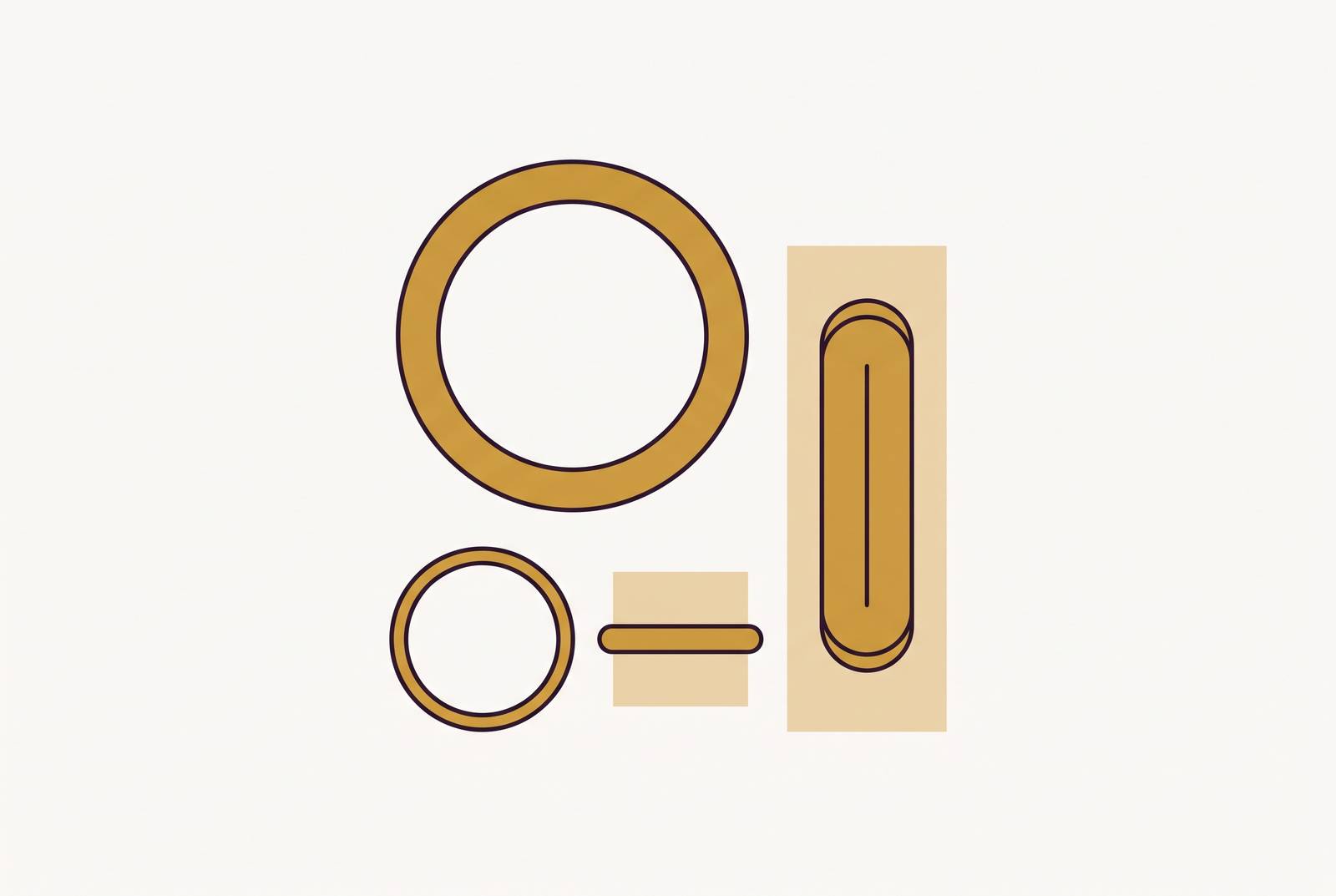
Wedding band width and profile options explain more than how a ring looks in a display case. Together, they determine how it sits, feels, and wears over decades. The best choice comes from testing both at once, rather than choosing a width and treating the shape as an afterthought. Your finger has to live with the decision.
Why width and profile need to be understood as a system, not two separate choices
A band that bothers you every day can leave you with a lovely ring that you keep wishing you hadn't bought. Buyers settle on a width, then accept whichever profile comes standard, even though the two interact through comfort, proportion, stacking, durability, and cost. A flat 4mm band and a domed 4mm band can look and feel like different rings despite sharing the same metal and finish. They catch the light in different ways, touch different parts of the finger, and sit differently beside another ring. Choosing the width alone leaves much of the purchase undecided.
What width actually measures and why thickness is a separate question
Width is the measurement across the top of the band in millimeters, which tells you how much of your finger it covers. Thickness is the depth of metal from the inner surface to the outer surface. These are not interchangeable measures of ring size. Width sets how big the band looks, while thickness affects how strong it is and whether it can be worn every day without bending. USA Jewels makes the distinction plainly, explaining that a ring can be wide and flimsy or narrow and nearly indestructible.
Profile is the band’s cross-sectional shape, including the form of its outer and inner surfaces. Think of a cut through the band itself. That shape tells you whether the top is flat or curved and how the inside meets your skin, neither of which a width measurement reveals. Width, thickness, and profile describe different parts of the same object, and none can do the other’s job.
How the width spectrum actually maps to real hands and real decisions
Ultra-thin or delicate bands, at 1.5mm–2mm, tend to disappear into a stack. They act as a quiet frame for other rings. That small footprint appeals when you want less finger coverage, but delicacy comes with a durability consideration. Precious metal bands under roughly 1.8mm can bend or warp during daily wear and normal hand activity.
Slim to classic bands, at 2mm–4mm, offer the most versatile middle ground. The 2mm–3mm range is the most commonly chosen for women wearing a band beside an engagement ring, while 4mm is the most popular unisex width. It provides structure without much bulk on the finger. Shorter or narrower fingers tend to suit 2mm–3mm, whereas longer or broader fingers can accommodate 4mm and up without the band looking oversized. Proportion is personal, though, and equal ring sizes do not guarantee equal reactions to the same width.
Substantial bands, at 5mm–8mm+, cover more of the finger and feel more present during hand movement. The classic default for men is 6mm, which makes itself known without turning into a cuff. At 7mm and above, a band becomes a strong visual statement and needs a comfort-fit interior for all-day wear. That extra presence also changes the budget. Wider bands use more metal and cost proportionally more, so a plain wide band can quote higher than a narrow diamond band. For someone who types, lifts weights, or works with their hands, the decision is therefore about daily contact as much as appearance or price.
Why sizing up is not optional for wider bands
A wide band grips more of the finger than a narrow band at the same nominal size. More interior surface traps more skin tissue and creates more friction, so bands 5mm and wider often need a quarter to half size larger. Haejin Jewelry gives a concrete comparison, stating that a 6mm band fits a full half-size tighter than a 2mm band at the same ring size. The number alone cannot predict the feeling.
USA Jewels recommends trying the specific width being considered before ordering. A narrow gauge cannot tell you how a 7mm or 8mm band will feel, and changing size does not remove the need to consider the interior shape. At those widths, comfort-fit changes how the ring feels on the hand.
The three profiles that cover most decisions: flat, low-dome, and high-dome
A flat profile has a straight top and defined edges, giving the ring a clean, architectural look. It suits someone who wants a deliberate modern shape. Black Pearl of Queens identifies 4mm and wider as the point where that flat surface reads most clearly as a design choice. The trade-off is physical as well as visual, because edges can feel sharp between neighboring fingers when the hand closes. Fine scratches also show more readily on the flat top than on a curved surface.
A low-dome profile has a gentler curve that feels comfortable, stacks easily, and keeps its looks over time. It is a particularly useful choice for everyday wear at narrower widths. At 1.5mm–3mm, the curve gives a slim band a comfortable shape that works in many settings without standing out. For someone who wants a band to cooperate with daily life and another ring, that is a useful middle ground.
Court or comfort-fit profiles curve on both the outside and inside, with high-dome describing the most pronounced form. The inner dome meets the finger at a central ridge. Less contact makes a substantial band more comfortable. A D-shape, by contrast, has a curved exterior and a flat interior, which provides a consistent surface for engraving. Both court and D-shape profiles wear more evenly in appearance than flat profiles because surface scratches blend into their outer curves. A rounded outside, however, does not tell you whether the inside is rounded too.
How width and profile interact: what each combination actually produces
At 1.5mm–3mm, a flat profile gives the band a modern, stripped-back look with clear lines. A flat interior presents a narrow but unyielding contact surface, while defined edges can feel sharp between the fingers. Changing that same narrow band to a low-dome profile produces a more forgiving everyday combination that stacks cleanly and holds its appearance over time.
At 4mm and wider, a flat top stands out more, with enough space for its shape to show clearly. It also gives fine scratches more room to show. Edges accumulate wear, although a periodic professional polish can restore the surface. This is a maintenance trade-off.
At 6mm and above, the interior becomes especially consequential because a flat inside presses across a broad area and can make the fit feel tighter. A comfort-fit interior is functionally necessary for comfortable all-day wear at this scale. That does not mean the ring must spin. Rotation depends more on sizing and finger taper than on the exterior dome, so a well-sized court can sit securely while an oversized D-shape can rotate.
Stacking with an engagement ring changes the width and profile calculus
An engagement ring adds a second shape that the wedding band has to accommodate. Now profile height can outweigh width as the deciding factor. A low-dome band can sit flush beside a solitaire with a rounded shank and minimize the gap, while a high-dome band sits higher and can create visible separation. That gap may look planned or awkward, depending on how high the engagement ring’s setting sits. A higher-set engagement ring with a prominent stone often pairs well with a court or D-shape band that can nestle underneath without catching on the setting.
A wedding band dramatically wider than the engagement ring’s shank can overpower it, even when both look good separately. MollyJewelryUS recommends approximately matching the shank width or choosing a slightly thinner wedding band for a harmonious stack. The practical counter test is to compare that proportion while checking whether the two profiles sit flush, leave a gap, or interfere.
Profile and width choices that suit physically active and hands-on wearers
For a life spent in a gym, workshop, kitchen, or outdoors, the goal is resilience without unnecessary bulk. That calls for informed selection of precious metal. A slightly narrower band in a more durable metal can balance strength with wearability, such as choosing 6mm rather than 8mm for someone who works with their hands. Thickness also matters when choosing the band, since width alone cannot tell how strong it is.
Bands 7mm and wider retain more heat and moisture because they cover more skin, which can change how comfortable they feel through a working day. That heat and moisture matter even more if you cannot take the ring off at work. Court and D-shape profiles also offer an advantage in how wear looks, since scratches blend into curved surfaces rather than standing out on a flat plane.
How to try on bands to test the system, not just the look
To turn these distinctions into a decision, compare a 2mm band, a 3mm band, and something in the 5mm+ range. Then ask the jeweler to show the same width in a flat profile and a court or low-dome profile, so you can separate the effect of width from the effect of shape. USA Jewels recommends wearing each width you are considering for a few minutes while making a fist and gripping something. A display light is excellent at showing polish and completely unqualified to assess a fist.
If you plan to stack the band, bring the engagement ring or a photo so its proportions and setting height are part of the comparison. During the try-on, check how comfortable the band feels after five minutes of normal hand movement, whether the rings sit flush or leave a gap, and whether the dome looks right or stands out too much. Notice, too, whether the inside seems to grip your finger or glide against it. With width and profile compared together, you can choose the ring that works on your moving hand.