Omnichannel Behavior of Custom Jewelry Shoppers
Shoppers discover online and verify in stores, so trust must carry across every channel.
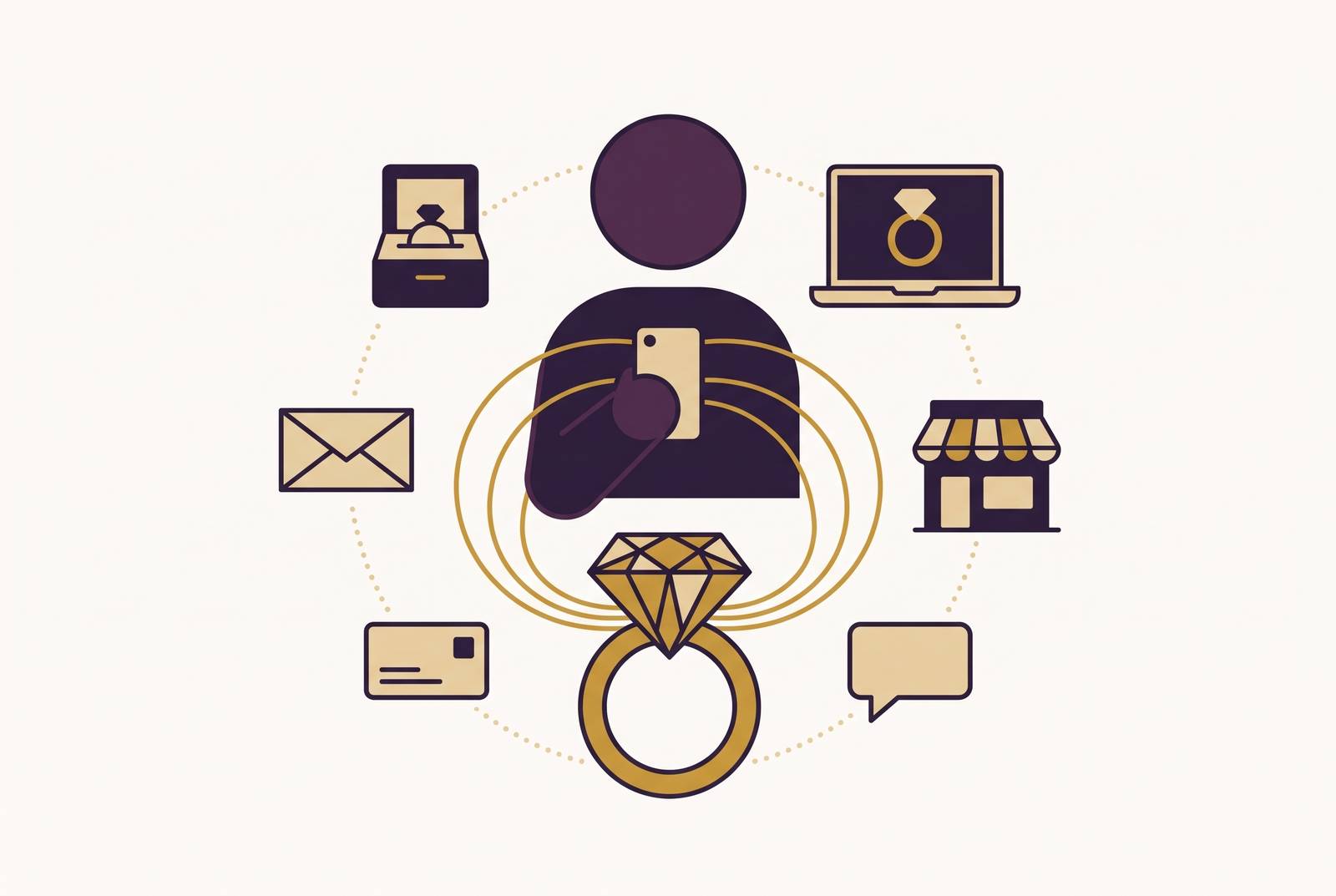
People shop for custom jewelry on screens and in stores, but they need to trust the brand all the way through to buy. Shoppers discover online, validate in person, and buy wherever feels right. Brands win the sale when the design, price, customer history, and finished piece match at every step.
How custom jewelry shoppers actually move across channels today
A shopper discovers a tennis bracelet on social media, explores the options online, and visits a store to see how it looks and feels. The purchase might happen there, or later on a phone. Discovery, validation, and checkout happen in different places because each channel serves a different purpose.
The RIJOY AI 2026 Jewelry Loyalty Report documents that 80% of fine jewelry purchases still occur offline. Physical retail has not disappeared from the picture. Its function has changed, with the store acting as a place to verify trust. A shopper can leave without buying and still be moving toward a purchase. The path is non-linear, but its pattern is recognizable, with online exploration followed by physical reassurance and a transaction wherever friction is lowest.
Why trust — not convenience — is the force driving shoppers back into stores
Can the shopper trust this piece, this material, and this jeweler? When a piece costs a lot and means a lot, a good-looking screen cannot put every doubt to rest. The trip to the store is therefore more than a preference for shopping in person. It is a response to uncertainty that the digital experience has not fully removed.
The average repurchase cycle for fine jewelry is 12–24 months, so a brand must keep its bond with the customer through a long stretch between purchases. Jewelry does not get the frequent chances to rebuild familiarity that a regularly purchased product does. When the customer comes back through another channel, a break in that thread can undo the trust built earlier. The trust deficit stems from the product and the purchase cycle, so better lighting in photographs alone cannot fix it.
What happens to revenue when channels are disconnected
When channels disagree, the shopper has to reconcile them. A different price or missing customer context turns the brand's internal disconnect into the customer's doubt. That doubt has a commercial cost. Omnichannel customers spend more in stores and online than single-channel customers and are more likely to return to stores. Disconnection makes checkout less convenient and puts that higher-value relationship at risk.
For independent jewelers, the break can happen before a shopper reaches the website. AI-enhanced channels, including Google AI Mode, agentic shopping assistants, and Etsy's marketplace integration with AI interfaces, expose product catalogs inside AI search results. Incomplete or disconnected product data can leave a jeweler invisible at discovery. There is no trust to recover if the shopper never finds the product.
Customization adds another strain once demand arrives. Brands can think that offering custom jewelry gives them an edge while missing how much work must be done by hand for each order. Without online configuration and automated approval-to-production workflows, each inquiry becomes another round of decisions, revisions, and emails. Success punishes the process that produced it. More demand means more back-and-forth, until the brand's promise of individuality becomes a queue with excellent taste.
How online configurators turn the trust problem into a purchase decision
A well-built configurator moves those decisions out of the email chain and into the shopper's hands. The customer can manipulate a 3D model, swap metals and stones in real time, and see an accurate preview of what will be manufactured. Choice becomes something visible rather than something described. That helps the shopper show what they want and judge how it looks before buying, so part of the consultation can take place online without a trip to the store.
Keyideas / Jewelith describes “concierge mode” as a shared live configurator session in which staff guide the customer's choices in real time. The consultation travels with the shopper. Instead of discussing separate images or trying to interpret a written request, both people view the same configuration. That shared reference narrows the distance between what the customer imagines and what the jeweler understands.
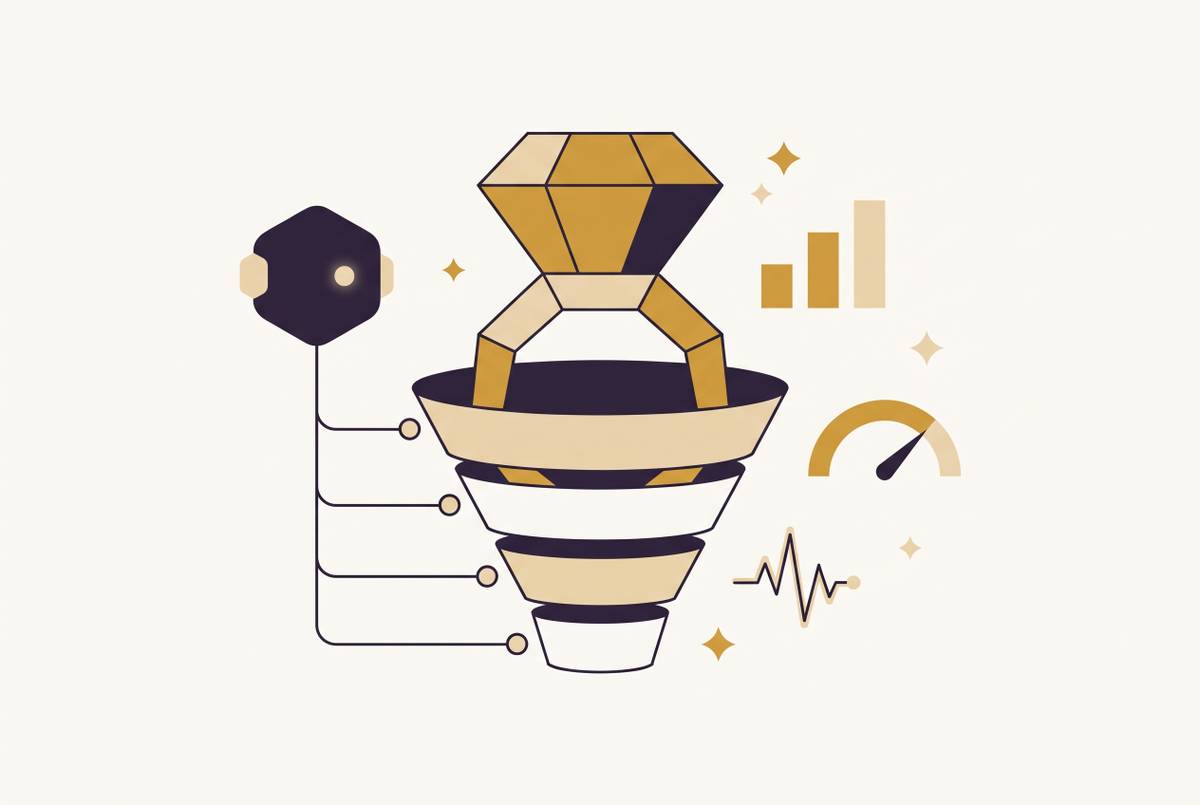
VisionThree reports a 45% higher conversion rate for configurator implementations compared with 2D gallery pages, together with reduced returns, longer engagement, and higher average order value. Jewelith also describes how a custom inquiry becomes a self-serve, pre-approved order because the shopper has already made the choices otherwise negotiated by email. The tool does not merely make custom jewelry look appealing. It gives the order a defined shape.
Why configurators only work if the design behind them is production-ready
That defined order is useful only if the design can become jewelry. A configurator that displays the perfect piece but produces a file that cannot be cast has postponed the loss of customer trust until a worse moment. The customer has already chosen and approved the design. Discovering then that it needs to change makes the preview a promise the brand cannot keep.
A design that cannot go straight to manufacturing is not truly production-ready. A photorealistic rendering shows what a piece could look like, while production-grade CAD must support making it. Those are different jobs. Precision, ring sizing, and parametric control connect the approved design to the physical result, so they belong inside the commerce promise.
For enterprise production, Rhinoceros 3D with the MatrixGold plugin provides those precision and control capabilities. The requirement, however, applies beyond enterprise teams. Every customer-specified configuration needs a manufacturing path that preserves the piece the shopper approved. If a human must redraw the design before production can begin, the workflow still contains a gap between visualization and fulfillment. A convincing image is not a casting plan.
How AI design tools let brands serve custom demand without scaling headcount
AI-powered design workflows address the staffing constraint behind that gap, beginning with concept approval. Diatech Studio describes tools that turn a detailed text brief into a photorealistic rendering in under a minute, replacing days of manual CAD iteration at the concept stage. The client sees a realistic proposal before production CAD is built. That sequence reduces expensive late-stage revisions by settling the visual direction earlier, without pretending that the rendering itself is ready for casting.
The same tools broaden the range a small team can explore. Diatech also describes variations tailored to regional tastes, cultural motifs, lifestyle data, and purchasing behavior that traditional studios cannot produce economically at the same breadth. Personalization no longer has to begin from scratch. Designers can serve finer preferences without treating every variation as a wholly separate manual project.
The output still determines how far the workflow reaches. Ruby Kinglet offers images, STL, OBJ, GLB, and editable 3DM files, from $7/month, spanning visual concepts and formats used further along the design process. Those outputs still have to be production-ready. The operational goal is to connect fast concept generation with usable manufacturing design, so a full design team becomes optional for serving custom demand. Automation then changes customization from a growing workload into a source of growth.
What the in-store touchpoint still does that digital cannot replace
Weight, finish, and scale read differently in the hand than on a screen, especially when material quality accounts for much of the piece's value. A model can rotate beautifully without telling a wrist how a bracelet feels. Tactile confirmation remains a distinct form of reassurance. It complements the preview.
A knowledgeable associate supplies another kind of confidence by answering detailed questions about stone quality, provenance, and sizing. The setting also has a role. Engagement rings, anniversary pieces, and gifts can call for a ritual that shoppers want to experience in person, even when they have already explored the design online.
Fenwick's 2026 case illustrates how styling events, live engravings, and gemstone education increase dwell time and cross-sell rates while generating measurable downstream digital behavior. QR-enabled product stories and digital receipts tied to customer profiles link those visits to what shoppers do later. The lesson for brands is to invest in stores as trust instruments and measure their contribution to downstream digital conversion and lifetime value.
How to connect the channels so the shopper's context carries across every touchpoint
To make that contribution visible and repeatable, brands need to connect the shopper's experience through a unified data and inventory layer. The first requirement is simple from the customer's side. The website, store, and partner channels should show the same stock and prices. Fenwick's case links harmonized inventory with faster conversion and fewer losses of trust. Store associates with tablet access to the full online catalog can also support purchases and cross-selling beyond what is physically present.
A unified customer profile links what the shopper does at the in-store POS with their digital browsing, configurator sessions, and post-purchase engagement. The shopper's history then has somewhere to live. Digital receipts support tracking cross-channel repeat visits, while QR-enabled product stories capture browsing intent that can inform later outreach. For a category with long gaps between purchases, that context gives retention efforts something more useful than a stale transaction record.
For independent jewelers, the practical sequence begins with auditing inventory and tagging it with channel-eligibility and provenance metadata. A commerce-ready catalog can then feed channels from one source, before the business expands into Google AI Mode or agentic checkout through the Universal Commerce Protocol. Clean data comes before broader exposure. Tiered SKUs also separate appointment-only pieces from products offered through broader AI marketplaces, with different product IDs, pricing, and fulfillment rules protecting how each is sold.
Once those foundations are connected, personalization can make follow-up more relevant. Fenwick's 2026 playbook describes propensity models that invite local shoppers who are keen to buy to make appointments, and recommendation engines that suggest mix-and-match sets or metals and stones that go together. Those recommendations can appear across email, SMS, and on-site widgets. The purpose is to keep the brand present between purchases with suggestions grounded in the customer's interests.
The design and commerce infrastructure that makes the full path executable
A shopper who discovers through social, configures online, validates in store, and buys on mobile has touched at least four systems. Each must support the same promise. Inconsistent information can weaken it during the journey, while a file that will not cast or a finished piece that differs from the preview can break it at delivery.
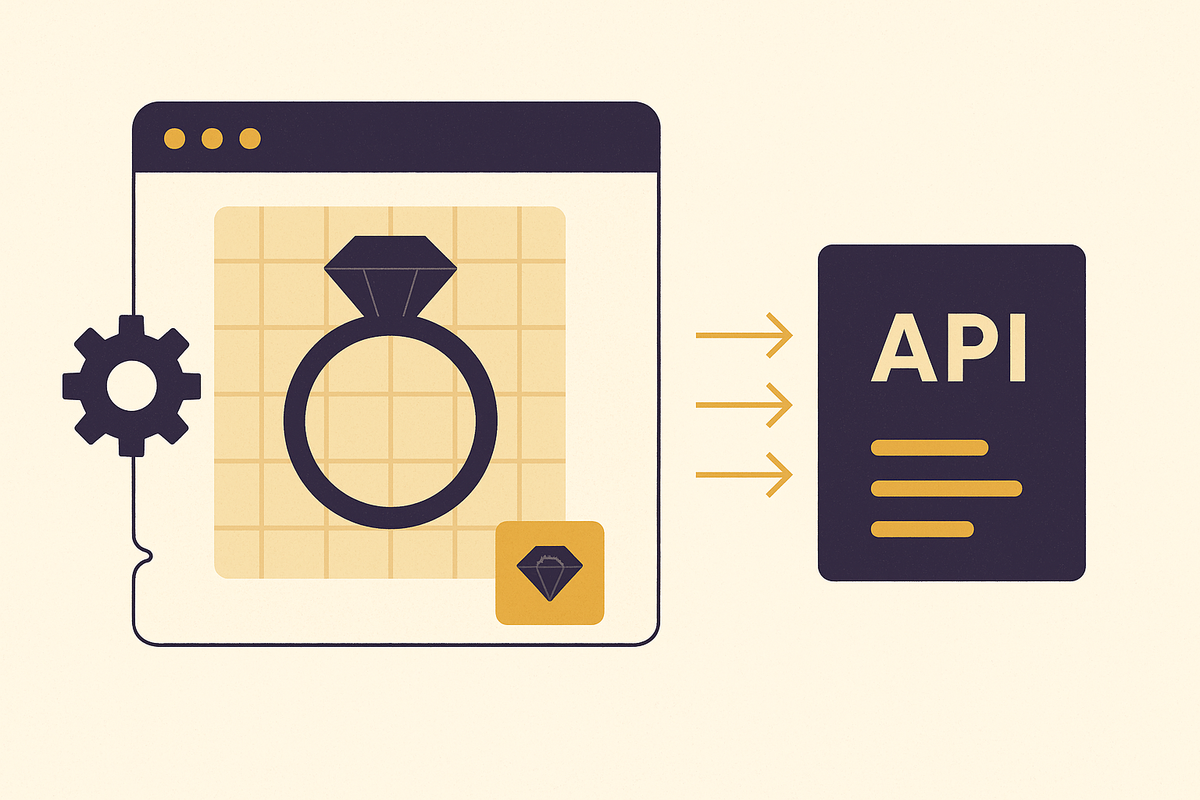
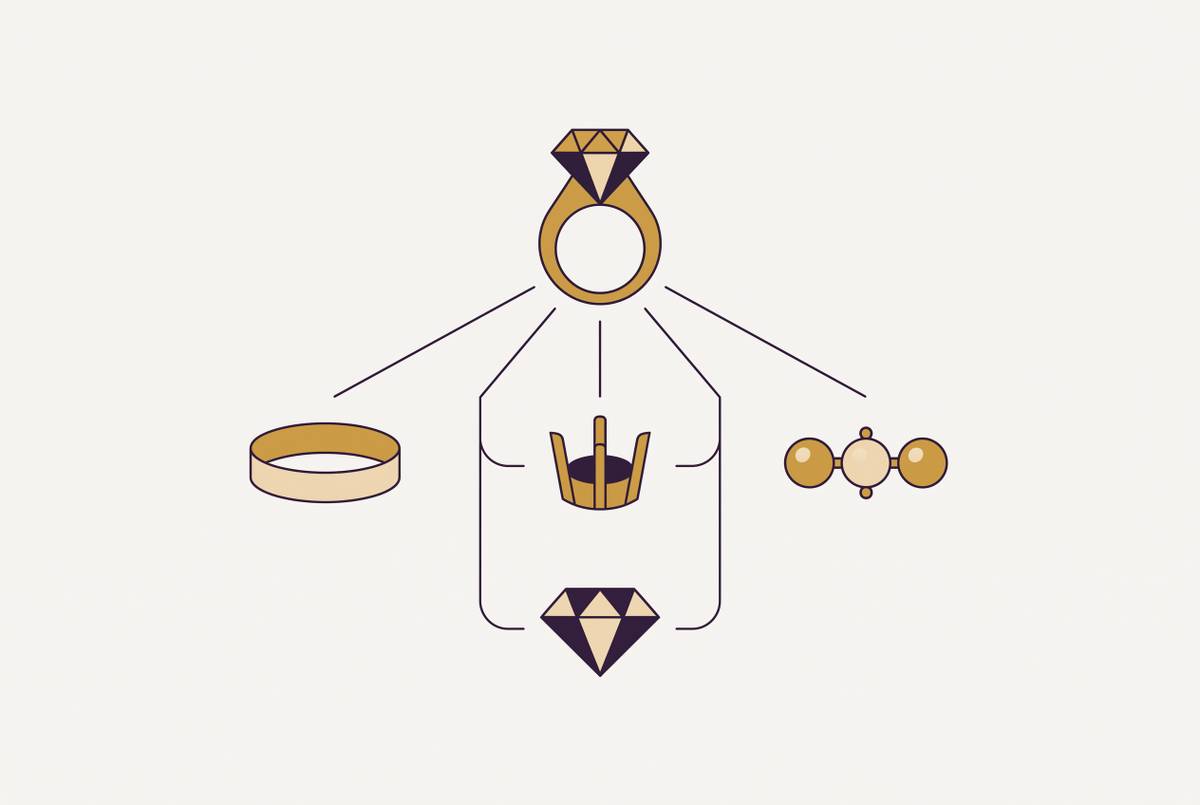
An integrated AI-powered jewelry design and commerce platform needs to cover the full path from concept-to-CAD-to-configurator. Concept generation must be fast enough to support real-time configuration, while parametric CAD must turn approved choices into production-grade files ready for casting. The configurator must work across desktop, mobile, and in-store tablets, with concierge mode for complex or high-value orders. Shared inventory, pricing, and customer context keep those channels in step. Visualization alone stops short of that job.
The scale differs for an independent designer and an enterprise brand, but the required connections do not. Enterprise tools that scale down let smaller businesses grow with manufacturing readiness built in from the start. The decisive capability is not the number of attractive previews a platform can generate, but whether it can preserve an approved design through purchase and production. With that integrated infrastructure, custom jewelry commerce turns a complex shopping path into a repeatable, manufacturable experience that reinforces the brand's promise.