Engagement Ring Buyer Segments by Purchase Modality
Three purchase paths demand different strategies to build buyer confidence in engagement rings.
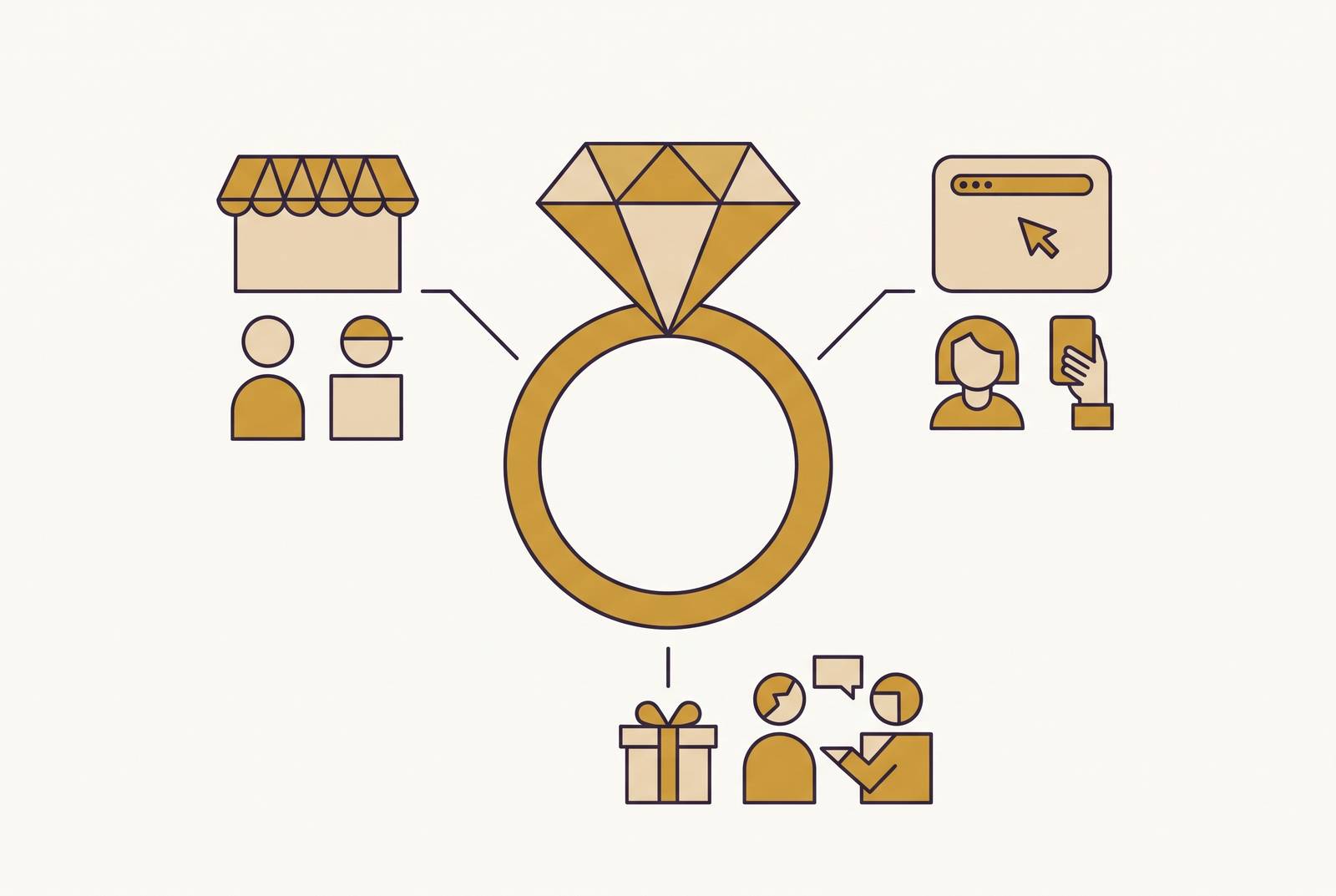
Engagement ring buyers divide into three useful segments, namely those who buy in-store, those who buy online, and those who research digitally before buying in person. Each needs a different route to the same assurance that the finished ring will match the design they approved. For jewelers, purchase modality shows what buyers need from the product experience before they feel ready to buy.
How purchase channel splits the engagement ring market today
The Knot’s 2026 study says that most proposers bought their engagement ring in person, while roughly one-third bought online. Both deserve a product strategy of their own. The split describes a market with a still-dominant in-store segment and a fast-growing online minority.
The purchase location, however, does not describe the whole journey. The same study reports that buyers visited an average of two retailers and physically examined a substantial number of rings, including buyers who ultimately ordered online. Buyers who pay in a store may also have done much of their research online. The final transaction is a useful starting point for segmentation, but the path leading to it distinguishes the in-store buyer from the hybrid buyer who arrives with much of the decision already made.
That distinction keeps the channel split commercially useful. It separates where the jeweler takes payment from where the buyer develops confidence. A showroom may help build trust even when the buyer orders through another channel, while a digital design tool may help them choose a ring they buy in a store. The channels are connected, even when sales reports place them in separate boxes.
Why customization has become the shared baseline expectation across all channels
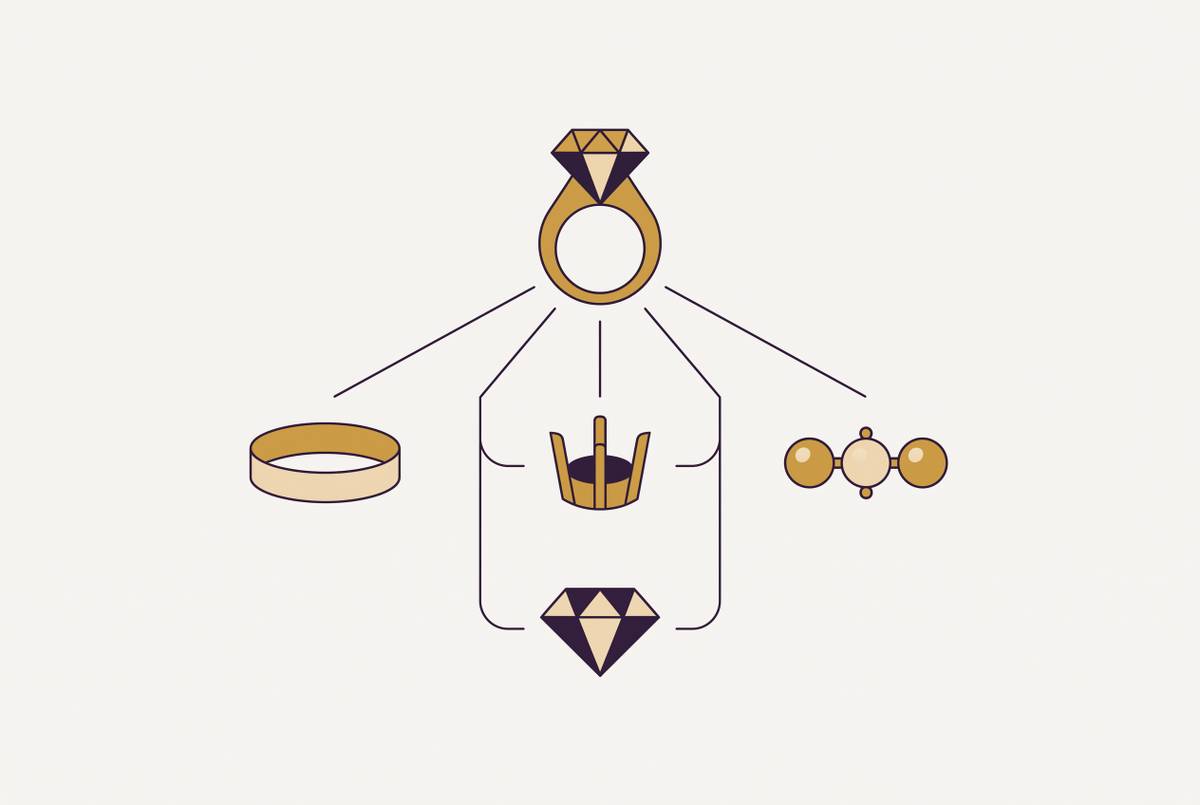
The Knot’s study says that nearly all couples made custom edits or fully custom-designed their ring. Those choices included selecting the exact diamond, adjusting band width, choosing metal color, and refining setting details. Customization is therefore not confined to buyers seeking an elaborate commission. It is the ordinary starting point for choosing a ring. The velvet rope around “bespoke” has become rather decorative.
This broad expectation changes what counts as a complete product offering. A buyer may like the shape of a ring but want a different stone, a narrower band, or another metal color. Those edits are how the buyer makes the original design personal. A catalog that treats every ring as a fixed object leaves little room for that process, whether the catalog sits on a website or behind a glass counter.
The shared expectation also makes channel differences more revealing. Buyers now need an experience that lets them choose and approve customization. More stock expands the selection, while customization gives buyers control over the selection they make. The next distinction is how each purchase path turns that control into confidence.
How the in-store buyer uses physical retail to build confidence, not just browse
The in-store buyer uses physical retail to feel more sure about a purchase that costs a lot and carries deep personal meaning. Seeing rings in person gives the consultation something concrete to work with, rather than leaving every choice to an image and an imagination. Physical presence is a feature. The store’s job is to help the buyer move from liking a design to feeling ready to approve it.
Signet Jewelers’ own 10-Q describes its “Connected Commerce strategy” as giving customers “the opportunity to use both online and in-store experiences as part of their shopping journey. That approach accommodates the consultation-driven role of stores without treating digital activity as a separate universe. The counter and the screen can support the same decision.
For jewelers serving this segment, live customization belongs inside the consultation. An associate needs to adjust settings, swap stones, and compare metals while the buyer can assess the choices. A beautiful modified design is not enough if it cannot be faithfully reproduced, and an agreed detail is vulnerable if there is no structured way to preserve it.
The failure is therefore bigger than an awkward sales conversation. It is a broken link between the decision made in-store and the ring that will be manufactured. The consultation builds confidence only when the buyer’s chosen design becomes a precise production instruction.
How the fully online buyer's path depends on visualization tools doing the work that a showroom would do
The fully online buyer needs the digital experience to resolve the doubts that remain at the point of purchase, whether or not physical research came earlier. A product page cannot offer touch, so it must provide specificity, interaction, and credible assurances instead. The screen has a demanding job. It must help a buyer judge the ring and how well they can trust that it will turn out as promised.
Online platforms meet that need with 360-degree diamond visualization, HD video inspection, thorough return policies, and third-party certification. Detailed views let buyers inspect the ring, certification helps them feel sure about it, and return policies help with the risk of buying before they have the finished ring in hand. Together, they substitute for parts of the showroom experience.
Customization asks more of the tools because the buyer must judge a design as it changes. A parametric configurator updates the whole design when a parameter such as stone size, metal, or prong style changes, while preserving proportions and production validity. That is more demanding than swapping a product photograph. The resulting render needs to show a ring that can actually be made, and checkout needs to pass the approved choices into the manufacturing order without manual re-entry.
The decision may also involve a partner who is not present at the same time. Designs that can be saved and shared let both people look over the same proposal before they order. Romance need not require synchronized browser sessions. For this segment, collaboration and production accuracy belong in the buying experience itself, before the buyer has committed.
How hybrid buyers — who research digitally but purchase in person — represent the most demanding segment of all
The hybrid buyer arrives with a head start. They have researched options, developed preferences, and often built or bookmarked a design before entering the store. They want to validate what they already have in mind, in the material and at the price point they researched.
That makes this segment more demanding than a simple blend of online and in-store shoppers. The buyer expects to keep the control they had online and gain reassurance in the store, without losing the work already done. If the associate cannot retrieve or reproduce the online design, the store interrupts the decision. The retailer may see no harm in starting again. To the buyer, it can feel like the first conversation never counted.
A website can present one version of a ring while the consultation produces another, with no dependable connection between either version and the manufacturing file. The buyer needs continuity of the design.
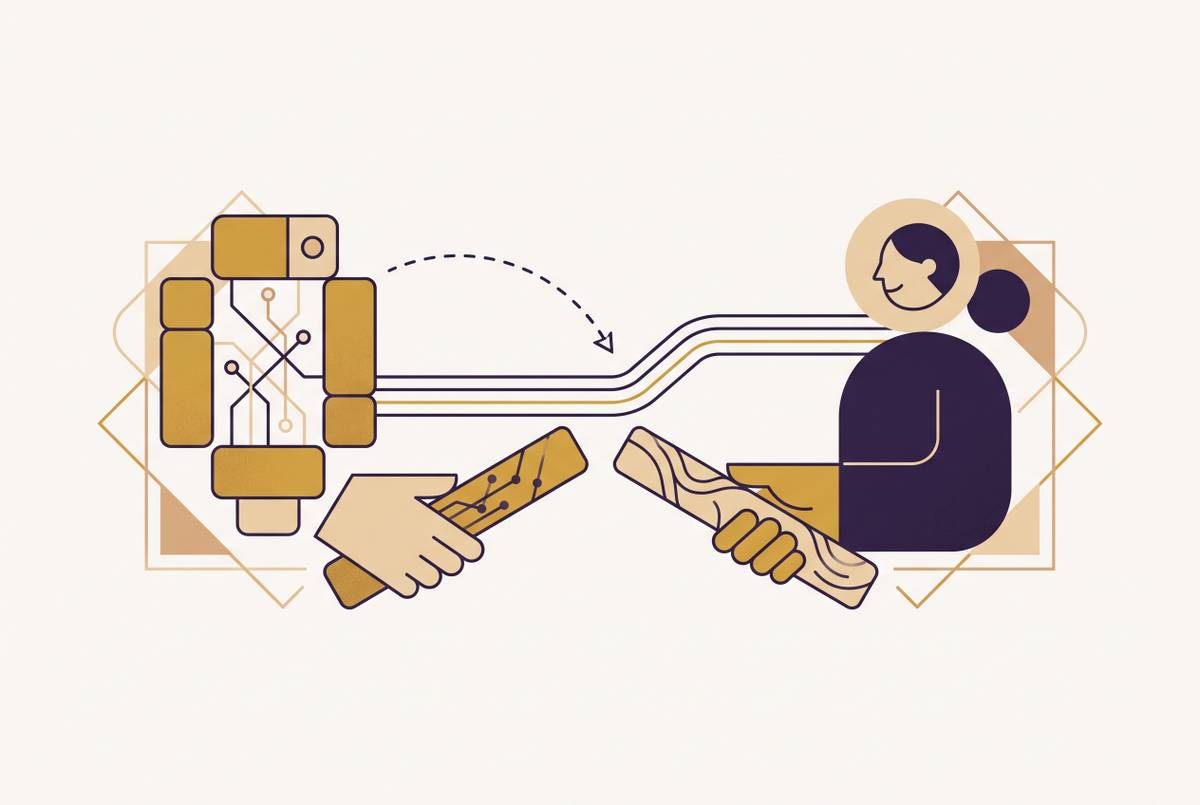
For jewelers, the response is a shared path from saved configuration to consultation to production. The associate needs to open the digital design, adjust it in real time, and confirm that the final approved version will proceed unchanged into manufacturing. This is where purchase modality becomes especially useful as a segmentation lens. The hybrid buyer is not asking for more channels, but for the existing channels to behave like one jeweler.
What design trends in 2026 reveal about each segment's customization priorities
Design trends in 2026 move away from standardized maximalism toward more personal, differentiated choices. Growing interest in toi et moi two-stone settings, bezel settings, and east-west orientations tests whether customization tools can change a ring’s structure. These are not just different coats of paint. A solitaire template with a metal selector cannot stand in for genuine parametric flexibility.
The Knot’s study reports that lab-grown stones now represent a majority of new engagement ring center stones. That choice needs accurate representation in the digital experience and the downstream CAD output. When that choice is paired with a setting, stone shape, and metal, it moves beyond a catalog filter to become part of the brief for making that ring. A bezel with a lab-grown stone and an oval in yellow gold each need to render accurately and produce a valid manufacturing design.
These trends do not establish that one purchase segment prefers one setting while another prefers a different one. Their value here is in showing how the same design choice tests each channel differently. The in-store buyer needs to explore it during a live consultation. The online buyer needs to inspect and control it through the interface, while the hybrid buyer needs the chosen combination to survive the move from screen to store.
A two-stone setting cannot be treated as a decorative suggestion that someone will decipher later. The configuration must remain coherent as its parts change, with the production-valid CAD file reflecting the design the buyer actually approved.
Why confidence in the final outcome — not just the design process — is what converts each segment
Across all three modalities, design inspiration is not the final obstacle. Buyers can arrive with plenty of ideas and still hesitate because they cannot tell whether the finished ring will match the approved design. That is a specific kind of uncertainty. General confidence in a brand does not automatically establish confidence in the exact dimensions, metal, stone, and setting of a custom piece.
Manufacturing confidence closes that gap. For the in-store buyer, it depends on seeing modifications captured and confirmed before leaving the consultation. For the online buyer, it depends on renders that map precisely to what will be manufactured. For the hybrid buyer, it depends on the digital design and the in-store version remaining part of the same production path.
A preview shows an intended result that someone still has to translate into manufacturing instructions without a linked production-grade CAD file. A lovely render is not a casting instruction, however flattering the lighting.
Designing a piece can make buyers more eager to buy because they put effort into choosing something that feels personal. Yet effort is not the same as assurance. Buyers need to trust the outcome of their choices to convert. This shifts platform evaluation away from how impressive the configurator looks in isolation and toward how faithfully it connects the approved design to the finished ring.
What each purchase modality requires from a jewelry platform's configurator and design pipeline
For jewelers choosing a platform, the practical requirement is a direct connection between customer-facing configuration and production-ready output. In-store use calls for live adjustments that an associate can capture and confirm during the sale, with those choices feeding directly into CAD production. For online buyers, the platform also needs accurate real-time renders, designs that partners can save and share, and production-grade CAD output when they buy. Hybrid use requires the same design to remain retrievable and editable across both settings.
The handoff is the decisive test. A configuration should not require a separate CAD team to reinterpret what the buyer meant, nor should moving into a store create a detached version of the design. The platform needs to preserve the approved choices through the production pipeline. Otherwise, the jeweler has improved the presentation while leaving the hardest promise unresolved.
Available tools approach parts of this brief from different starting points. Virtual Diamond Boutique’s VDB Ring Creator combines a retailer’s inventory with VDB virtual inventory so customers can build rings and order through Shopify. Punchmark describes SiteManager as a platform made specifically for independent retail jewelry stores, with built-in engagement ring tools. Those are legitimate areas of focus, but neither description alone establishes how an approved configuration becomes a production-grade CAD file.
Evaluate that manufacturing connection explicitly. A platform must support the buyer’s chosen route without weakening the link between approval and production. One that stops at visualization leaves the confidence gap open. One that connects configuration to casting closes it.