Launching a Made-to-Order Jewelry Brand Without Upfront Inventory
Skip inventory and validate designs with AI renders before manufacturing a single piece.

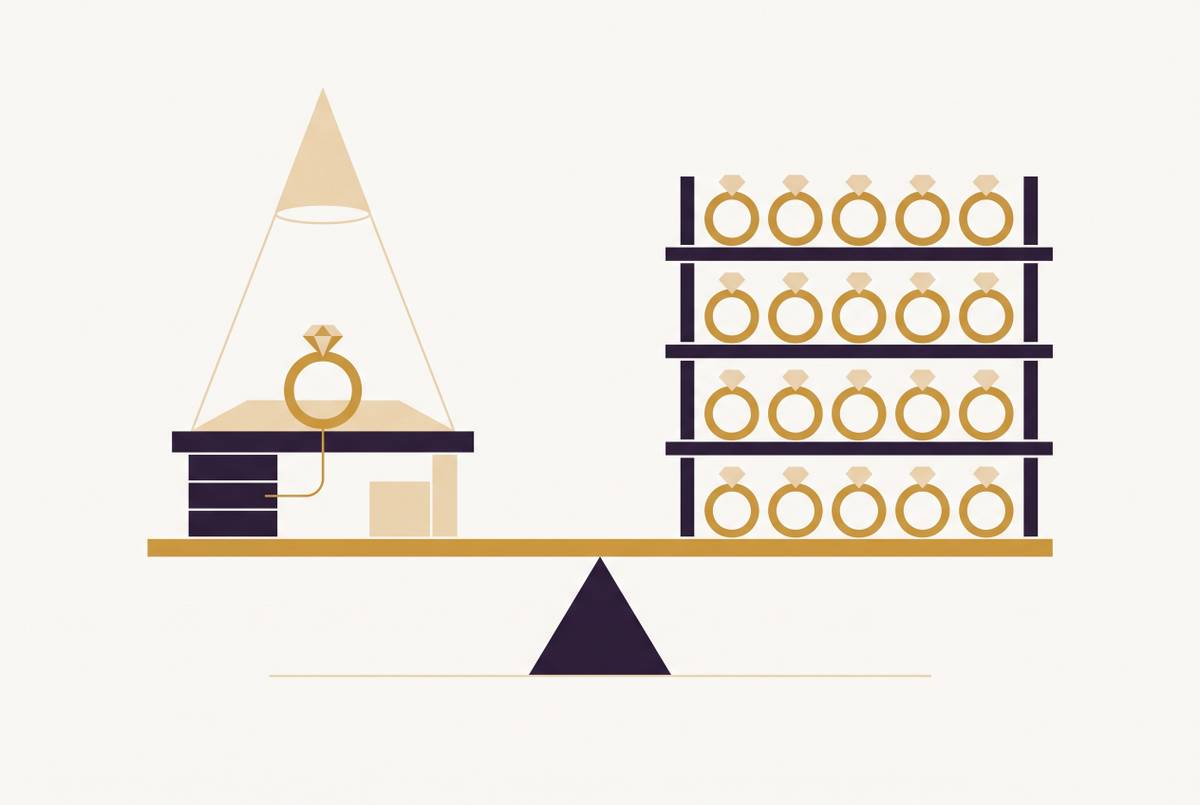
The jewelry market hits $381.5 billion this year, climbing to $578.5 billion by 2033, and a chunk of that growth belongs to brands that never touch a box of inventory. Demi-fine alone is roughly doubling, from $3.59 billion to $7.53 billion by 2034. The pattern among successful made-to-order launches is consistent: they skip the display case, and the display case doesn't miss them.
A traditional storefront wants something like $75,000 sitting in a bank account before the first ring sells. Made-to-order flips that. Money follows the sale instead of aging under a jewelry case light for six months. People want their initials engraved, their stone swapped, their band sized to a knuckle no chart has ever accounted for, and most of them will wait a few weeks for it without complaint.
None of that works if you skip the plumbing behind it, though. Building a business with no inventory still means building a business. You're just hiding the hard part somewhere the customer never sees it.
Four made-to-order model architectures and which to start with
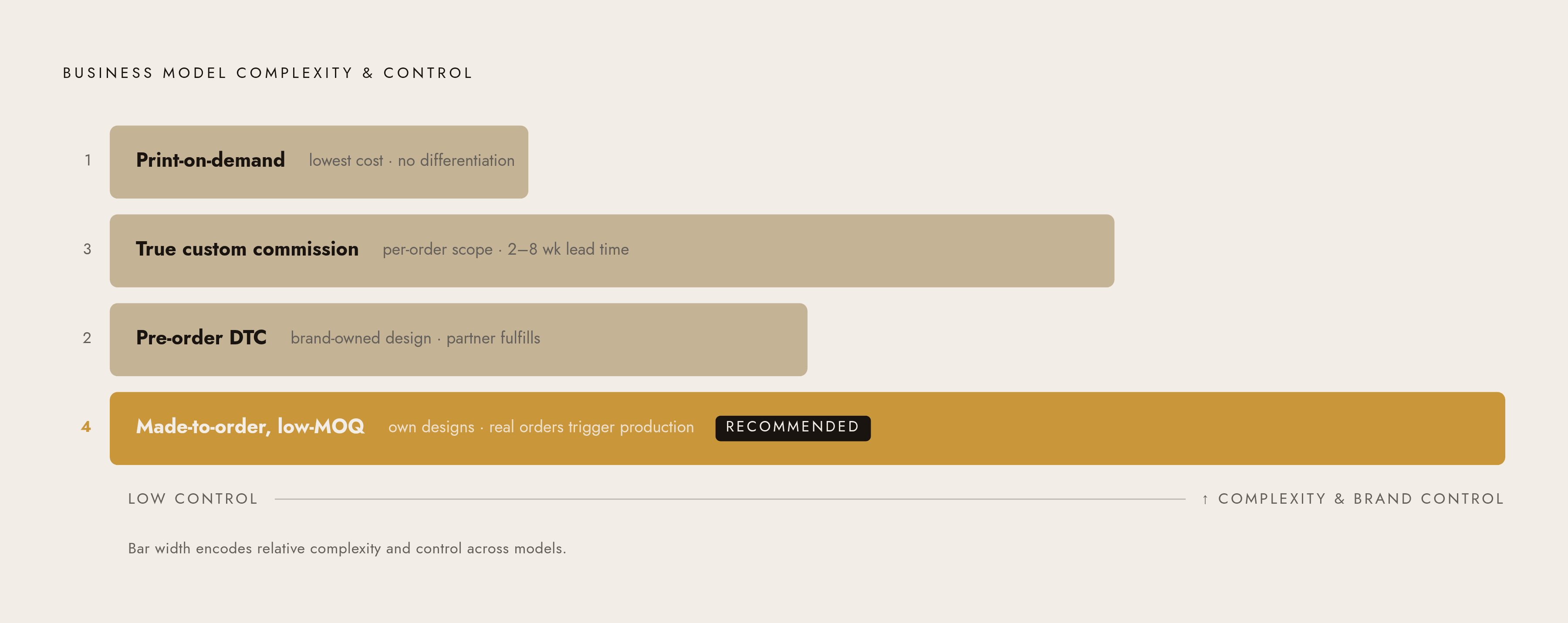
There are four ways to run this. They are not interchangeable, and treating them that way is how people burn their first year.
Print-on-demand / white-label dropship is training wheels. A supplier makes the piece after the order lands, you never touch a single item, and it costs almost nothing to start. Here's the catch: your differentiation costs almost nothing either. You're selling the same white-label ring off the same catalog page as forty other stores, all bidding on the same Instagram ad.
Pre-order DTC puts you in charge of design and brand. A manufacturing partner handles making and shipping once the order's confirmed. You're running a design and marketing operation, not a factory floor, which is a very different set of Tuesdays.
True custom commission treats every piece as its own small project: consultation first, price scoped to complexity, lead times of two to eight weeks. Margins are good. So is the workload, because someone's holding every order's hand from first sketch to final shipment, and that someone is probably you at 11pm.
Made-to-order with low-MOQ manufacturing sits in the middle. You own the designs, production starts only when a real order lands, and nobody's making you commit to 500 units of something nobody's asked for. Small batches. Watch what sells. Scale the winners.
Start with the fourth one. Pick a small, repeatable set of designs and get one supplier relationship working smoothly before adding anything else. Custom commissions are worth bolting on later, once collection fulfillment stops eating your whole morning. Bolt bespoke work onto an unproven system too early and you've built two businesses fighting over the same attention, both losing.
How to create sellable designs before you have a manufacturing relationship
Here's the part that trips people up: you can sell a ring that doesn't exist yet. A photorealistic render, or even an AI-generated concept image, is enough in 2025 to get someone to put down a deposit and sign off on a design. No cast metal. No set stone. Nothing physical at all, which still feels a little like a magic trick even after you've done it a dozen times.
That's the point of doing it this way. It separates your financial risk from your creative process. You validate the design before spending a cent making it.
Text-to-image tools like Midjourney and DALL-E churn out jewelry variations from a detailed prompt. GIA's Gems & Gemology (Fall 2024) looked into this, and the findings are worth knowing before you get too comfortable: these tools hallucinate compositions that look gorgeous and physically can't be made, they botch proportions any jeweler would catch in half a second, and they raise IP questions nobody's fully settled. Treat AI concept art as a conversation starter, something that gets a reaction and a deposit, not a blueprint you hand your caster. Pretend otherwise and you'll end up with a beautiful image and a caster who just shrugs at you.
A 2025 study out of RSIS International found AI workflows turning hand sketches into professional-looking product images, which lowers the bar even further. Multi-modal tools now take text, image references, sketches, even voice, so someone with zero design training can direct the whole creative process without opening a CAD program once. A few worth knowing: Fluxai.art (virtual try-on built in, so customers see the piece on themselves before buying), Fotor's AI Jewelry Generator (wide style range off simple prompts), Dzine (fast concepts built for non-designers).
All of it feeds your approval and deposit workflow. The image becomes a business asset before the piece becomes an object. What none of it can do is hand a manufacturer a file to cast from. That's a different job, and it needs a different tool entirely.
What makes a design actually production-ready, and why it matters
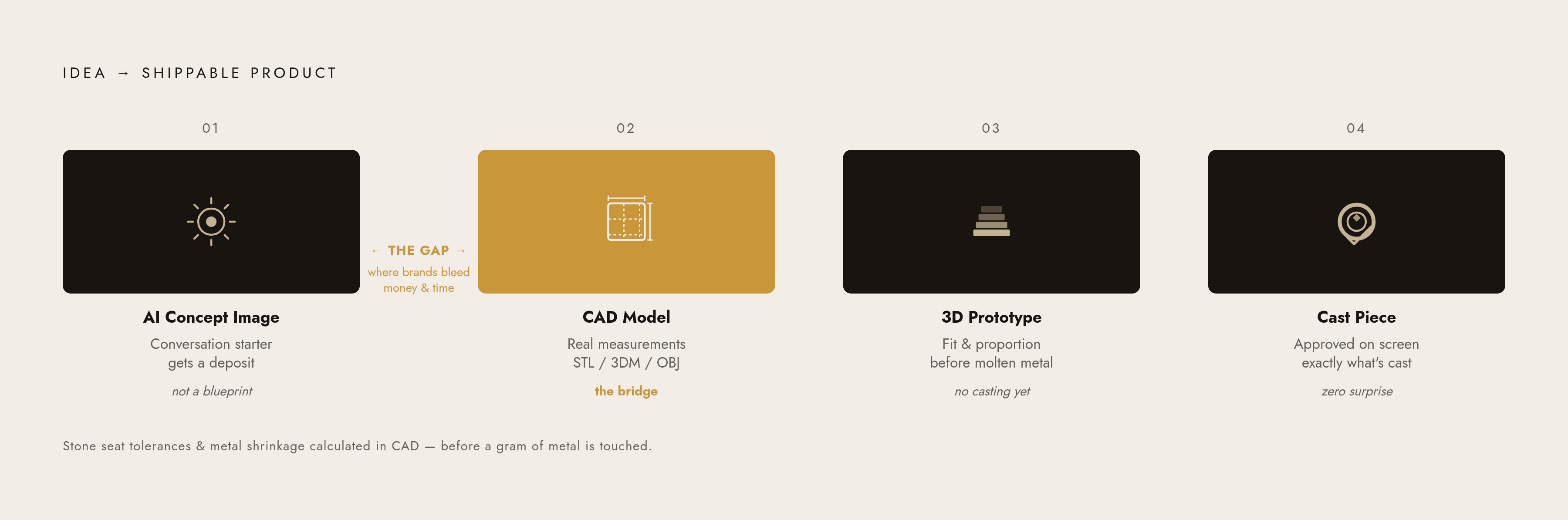
A pretty render and a production-ready file are two different animals, and the gap between them is exactly where made-to-order brands quietly bleed money and time. I've seen someone lose three weeks because a "finished" render had a prong that physically couldn't hold the stone it was drawn around.
CAD is the bridge. A sketch or an AI image captures the idea; a CAD model captures the actual measurements. Stone seat tolerances. How much the metal shrinks during casting. Whether the structure holds together at jewelry scale instead of collapsing under its own ambition. Purpose-built software like RhinoGold, MatrixGold, and JewelCAD exists because general 3D software doesn't know or care about any of that. Nobody designed it with a two-millimeter prong in mind.
From there, the file exports into formats a 3D printer, CNC mill, or casting shop can actually read: STL, 3DM, OBJ. Skip that step and your manufacturer is stuck, and a stuck manufacturer means a blown lead time, which means the one email you never want to send.
"Production-ready" buys you something specific. What the customer approves on screen is exactly what gets cast. There are no surprises at delivery, no re-orders, no awkward email explaining why the ring in their hand looks nothing like the picture they fell for.
It's faster, too. Adjusting a bezel height or a band width in CAD takes seconds. Doing the same thing with physical prototypes takes days, and days pile up fast when you're running small batches instead of one bulk order. This detail, more than any other, is what makes the made-to-order math work at low volume.
More than 60% of professional jewelers were already using 3D printing in some form by 2025, with adoption expected past 75% by the end of 2026. A printed prototype off the digital file lets you check fit and proportion before anything touches molten metal. If you don't want to learn CAD yourself, hand the AI concept image to a CAD professional as reference and let them build the production model around it. Some platforms now combine AI concept generation with parametric CAD output directly, producing a manufacturing-ready file with nobody needing to redraw a thing, such as Pencil Design, which is built for jewelry CAD and configurators specifically. That's where a brand still finding its footing saves real time.
Building the customer configuration experience that triggers production
Nothing gets made until someone clicks a button and pays. That makes the configuration page the single most important moment in your funnel, arguably more important than whatever ad brought them there in the first place.
Parametric design makes this possible. A designer sets the parameters (metal, stone, size, finish, engraving), and the system generates valid combinations without rebuilding the model from scratch every time someone changes their mind about rose gold. Every selection has to produce an actual manufacturable file, not just a nice picture on a screen. A visualization tool shows you what something might look like. A configurator guarantees it can actually be made. Those look identical to a customer and are not the same product at all.
Customers buying custom want to see their specific piece before committing, not a stock photo standing in for it. A real-time 3D preview with accurate metal and stone rendering does a lot of the selling on its own, and it quiets that post-checkout doubt everyone gets right after hitting buy.
The deposit locks in right here. It secures the order, funds early production cost, and creates a real contractual relationship between you and the buyer, which matters a lot more for true custom work where the stakes per order run higher.
This experience can live anywhere: product pages, in-store kiosks, appointment booking flows, embedded widgets. Wire it into your manufacturing side (CAM integration) and the customer's choices translate straight into production instructions. There's no manual re-entry, no room for a stray keystroke to turn a size 7 into a size 9 at 2am when nobody's checking.
Start narrow. A configurator with a limited, well-defined set of options is manageable. One with infinite combinations sounds great on a pitch deck and will bury you in complexity before you've shipped your tenth order.
Finding and qualifying manufacturing partners for on-demand production
Made-to-order doesn't remove manufacturing complexity. It moves all of it into one relationship. Choose that relationship like it matters, because it does, maybe more than anything else in this whole list.
You need a partner willing to run with no minimum order quantities, one who can open your CAD files without redrawing them, and one who gives you real lead time numbers instead of hopeful guesses. Quality has to hold whether they're running a batch of two or a batch of twenty.
Low-MOQ manufacturing genuinely exists now, which wasn't really true a decade ago. You can test a new design in a small batch, watch how customers respond, and scale the winners without switching factories or overbuying stock nobody wants yet.
File compatibility isn't a nice-to-have. Make your manufacturer redraw your production file by hand and you've added a step where errors creep in, and costs creep up right behind them.
Whatever lead time you quote customers has to come from your manufacturer's real production cycle, not your gut feeling on a Tuesday morning. Two to eight weeks is standard for custom work, but that number only means anything if it's built backward from what your partner can actually deliver, not forward from what sounds good on a landing page.
One manufacturer means one point of failure. A brand carrying zero inventory buffer feels a supplier hiccup faster and harder than a brand holding stock ever would. Some founders handle wax or resin printing in-house and outsource only the casting, since material use in 3D printing runs above 90% efficiency and the 3D printed jewelry market is projected at $4.89 billion in 2026. That shaves turnaround time and per-unit cost at modest volume.
Treat the relationship like a conversation, not a vendor you email once a week and forget about between invoices. Feedback on file quality, stone tolerances, structural weak points, all of it should loop back into your design system. The good operations treat the manufacturer like a collaborator at the same table, not a vendor down the hall.
Pricing, cash flow, and the deposit structure that makes the model work financially
You collect the money before you spend it. That's the financial edge made-to-order hands you, and you only keep it if your deposit and pricing structure is actually built to capture it, instead of just assumed to work.
Pricing needs to cover materials, CAD and design time, manufacturing, fulfillment, and a margin that reflects the extra work of managing individual orders instead of one big production run. True custom commissions swing too much by complexity and labor hours for a flat price sheet to hold up. You need a scoped estimate process instead, built order by order.
The deposit does three jobs at once: it secures the order, it funds the materials you're about to buy, and it makes sure the customer is as committed as you are. Skip it and you're carrying all the risk on an order that might fall apart halfway through production. State your deposit terms clearly at checkout, refund policy included, not buried three clicks deep where nobody reads it.
Map your cash flow from the moment the deposit lands, to when production costs hit, to when final payment and delivery happen. If that gap is wider than your working capital can stretch, you've got a problem before you've shipped a single piece.
Low-MOQ manufacturing costs more per unit than a bulk run, so price for that reality up front. Your margin advantage here comes from carrying no inventory, not from magically cheap manufacturing that doesn't exist anywhere. As volume grows and your manufacturer relationship matures, go back and revisit your pricing. Unit economics improve with scale, and there's no good reason your prices should stay frozen at whatever guess you made on launch day.
Setting up the fulfillment and communication workflow that delivers on the lead time promise
Fulfillment here is a communication problem that happens to travel in a shipping box.
Someone who just put a deposit on a custom ring checks their inbox more than they'd admit. Go quiet for two weeks and you'll get a cancellation request, or worse, a chargeback landing on your desk on a Friday afternoon, which is somehow always when it happens. At minimum: an order confirmation with a stated timeline, a notice when production starts, and a shipping notice with tracking. Fill the gaps between those with short, proactive updates, even when there's nothing new to say.
A spreadsheet handles your first ten orders fine and falls apart completely by your fiftieth. You need something, even a simple CRM or operations tool, that ties each customer record to the right production file and the current manufacturer status.
The handoff to your manufacturer has to be clean: production file, material specs, stone details, size, finish, engraving instructions, all traveling together as one package. A verbal instruction or a scattered email thread is exactly where errors sneak in once you're running real volume instead of ten orders a month.
Before anything ships, check the finished piece against the approved digital design. Catching a mismatch here costs a lot less than catching it after a customer's already opened the box on camera for their followers.
Custom work needs its own returns policy. Full stop, not up for debate. Standard e-commerce return rules don't apply to a ring engraved with someone's anniversary date. Write the policy down clearly, at order and again at deposit, so nobody's blindsided three weeks later.
As volume climbs, the bottleneck moves. It stops being about design or manufacturing and becomes about keeping every order straight in your head, or in your system, whichever one still works by then. Build for that early, before you're forced to hire your way out of chaos you built by accident.
Launching the brand online with digital assets instead of physical inventory
At launch, your product photography doesn't exist yet, and that's fine. Photorealistic renderings and 3D assets stand in for it, and customers buy off those images before a single physical piece has ever been made.
Render quality is a signal whether you meant it to be one or not. A flat, low-quality image reads as risk to someone about to hand over money for a thing they can't touch or try on. A render with real metal sheen, real stone brilliance, correct scale, reads as craft and confidence instead. Same product, wildly different signal, and customers pick up on it faster than you'd think.
The tools to produce that quality aren't locked behind enterprise budgets anymore, either. The AI-generated 3D asset market hit $1.63 billion in 2024 and is headed toward $9.24 billion by 2032, growing at 24.29% a year. That's mainstream now, not some niche corner of the internet only hobbyists know about.
Your product page has to do double duty: show the configuration options, state the lead time plainly, explain the deposit, and prove the quality of the finished piece, all on the same scroll. It functions as a sales page and an operational contract sitting side by side, whether you designed it that way on purpose or just got lucky.
Virtual try-on, through tools like Fluxai.art, cuts down hesitation specifically for jewelry, where customers are used to holding a piece before buying and now simply can't. Give them every confidence signal you've got.
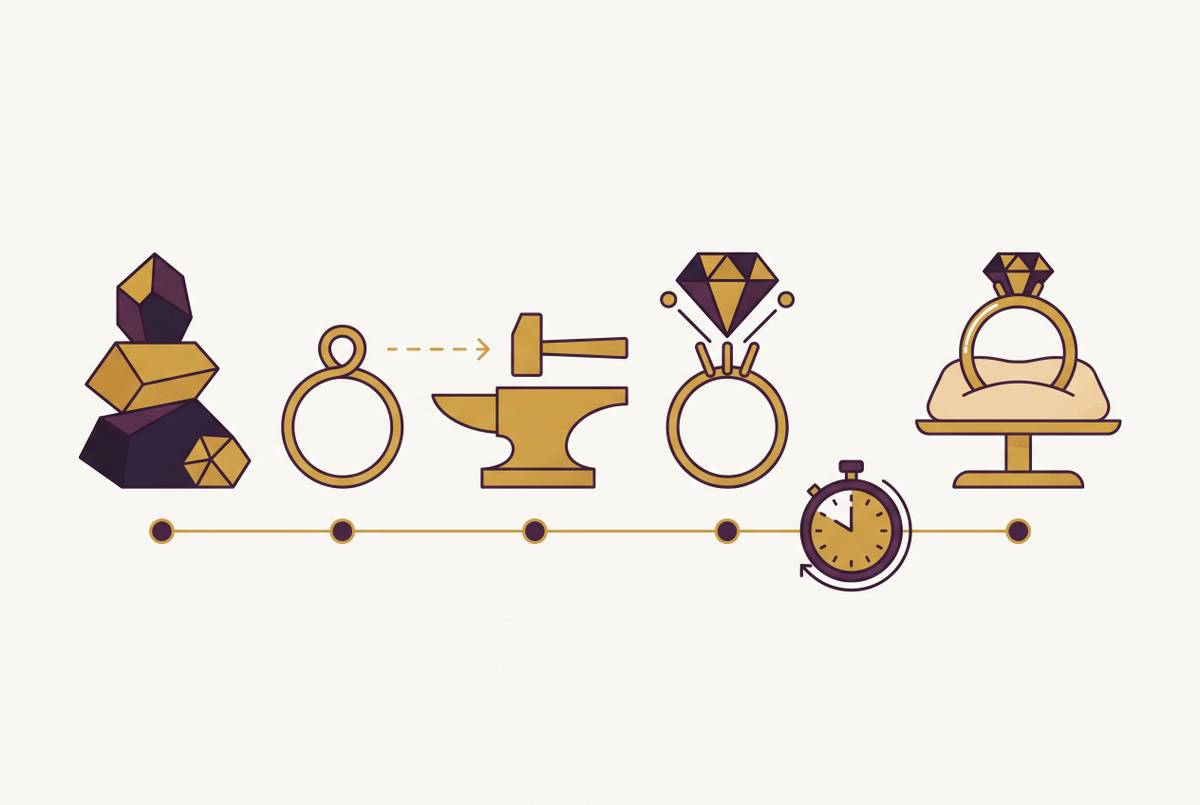
Don't hide the process, either. Showing the path from AI concept, to CAD file, to cast piece, is content worth posting on its own. It builds trust in your craft and sets you apart from dropship competitors who have no process to show, because they never built one worth showing in the first place.