White-Label Jewelry Design Services Built on an AI Platform
AI jewelry design platforms only matter if they output manufacturing files, not just images.

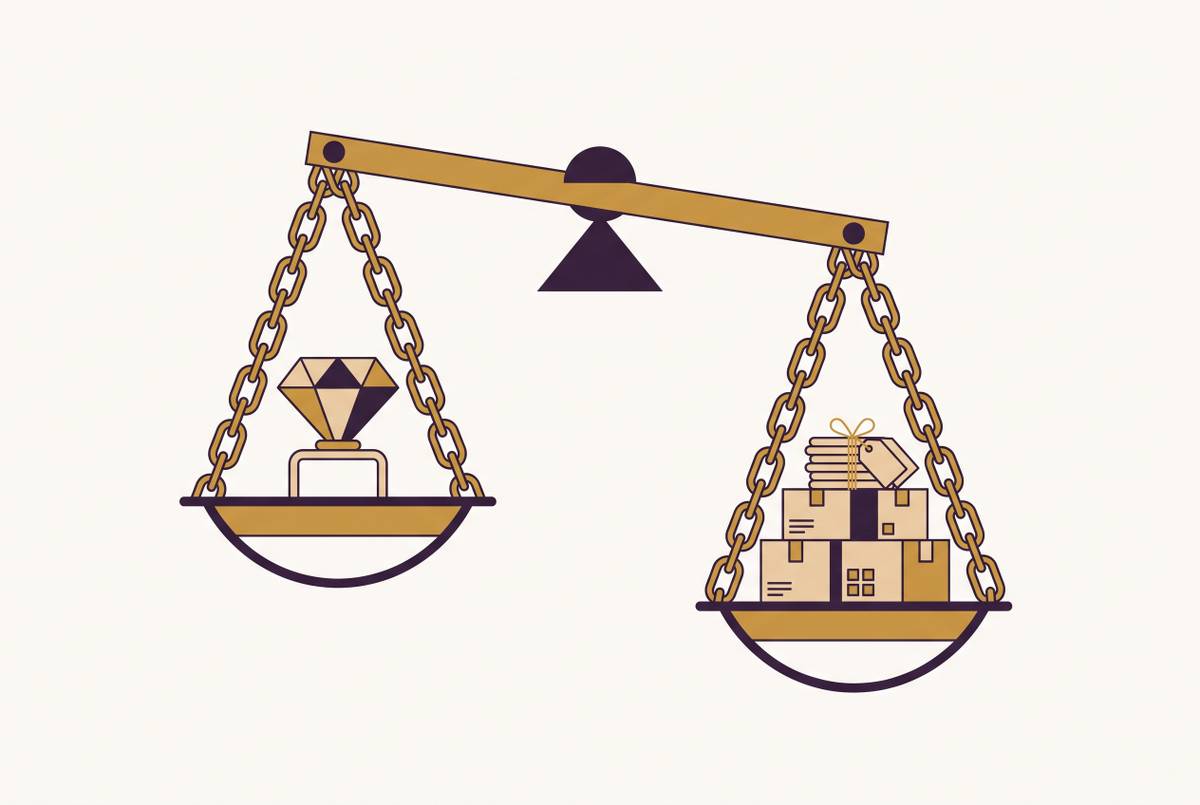
The custom jewelry market is growing three times faster than the jewelry industry as a whole, and most brands have no real way to meet that demand. White-label AI design platforms exist to close that gap, and the ones that actually work share one trait: they output a manufacturable file, not just a pretty picture. That distinction is the whole ballgame. This piece breaks down what these platforms do, where most of them quietly fail, and why waiting another year to adopt one costs more than it looks like it does.
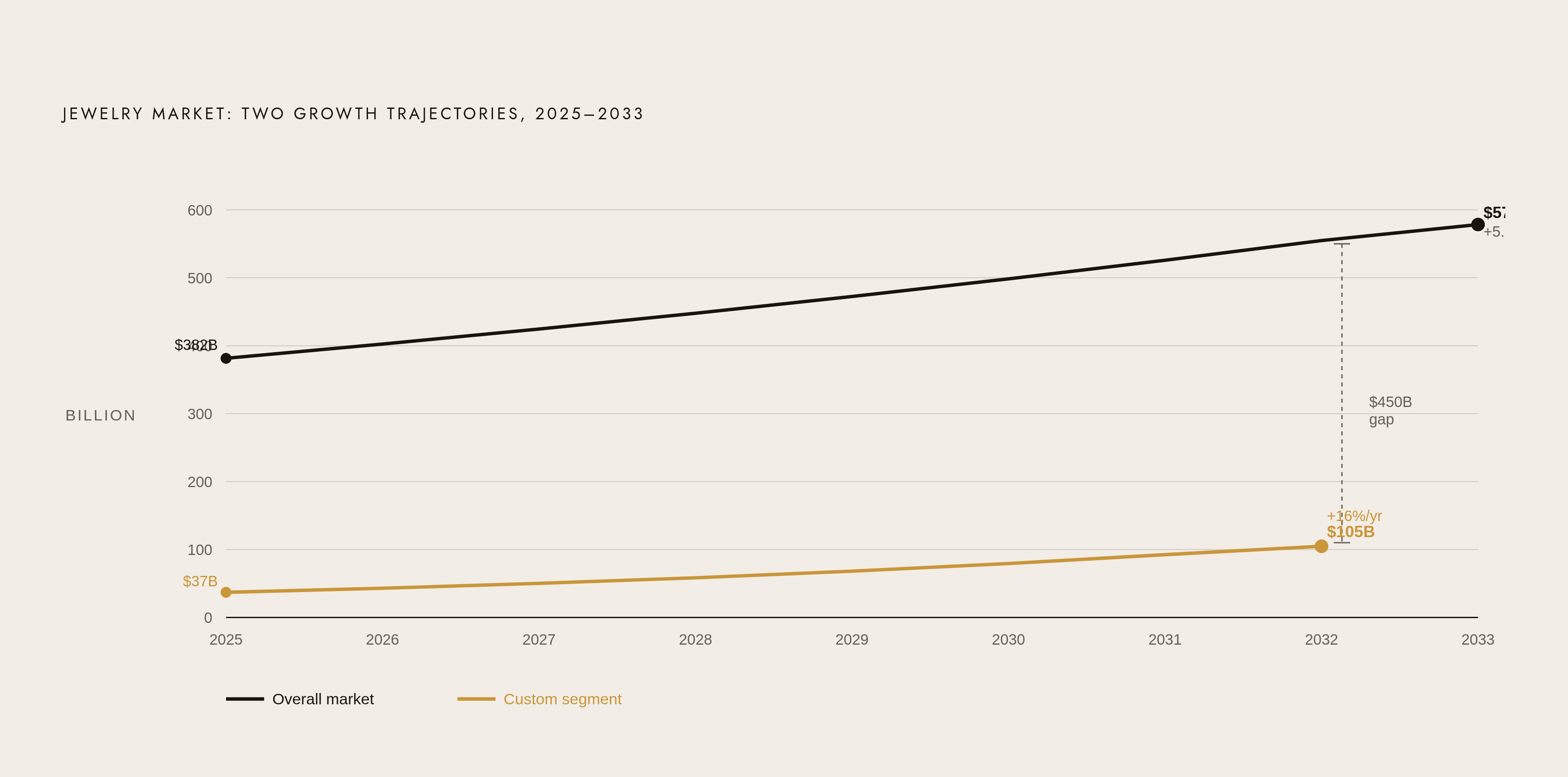
Some numbers first, because they set the stakes. The overall jewelry market sat at $381.5 billion in 2025 and is projected to hit $578.5 billion by 2033, a 5.5% annual growth rate, which is fine, healthy, and unremarkable. Customized jewelry specifically was worth $36.98 billion in 2025 and is on track for $104.89 billion by 2032, growing at over 16% a year. That's a different business growing inside the old one, like a hermit crab that outgrew its shell and found a much bigger one made of money.
The demand isn't a passing mood, either. Something like 65% of consumers say they'd rather have a personalized piece than a standard one, and Gen Z and millennials, the two generations with the most spending power still ahead of them, are the most likely to go looking for it. Nearly half of all online jewelry purchases already involve some form of customization, and mobile accounts for well over 60% of those transactions. Any customization tool that only works nicely on a desktop screen is already behind.
Here's the structural problem underneath all this growth. Demand for custom jewelry is real and rising fast; building an in-house design operation capable of meeting it (hiring CAD specialists, running a studio, managing production) is expensive, slow, and out of reach for most brands. White-label AI platforms exist to solve that exact mismatch, and picking the wrong one is worse than picking none at all, since a bad platform still costs money while producing nothing a factory can actually cast.
What white-label AI jewelry design services actually are — and what they are not
White-label software works like a ghostwriter: one company builds the product, and another company puts its name on the cover and sells it as its own. The brand keeps the customer relationship, the storefront, and the invoice, while the platform underneath stays invisible, which is the point.
In jewelry, this looks specific. A boutique studio or a retail chain embeds a design and customization engine directly into its own website, and the customer picks metal, stone, setting, and engraving, all inside an interface branded top to bottom as the retailer's own. Nobody sees the platform doing the work behind the curtain, since the brand collects the lead, takes the deposit, and fulfills the order while the AI stays plumbing, not decoration.
What makes the "AI" part meaningful, rather than just a rebadge, is the shift from menus to generation. A basic configurator gives a customer fixed options: pick from column A, column B. An AI-driven system takes a text description, a sketch, a vague style preference, and generates actual design variations from it, often ten to twenty design variations rapidly. That's an always-on design partner no boutique could hire for the price of a junior employee, let alone build in-house.
Not every "AI design tool" belongs in the same category, though, and treating them as interchangeable is the mistake that burns brands the most money. A 2D image generator that spits out a pretty render is one thing, a general-purpose AI chatbot bolted onto a jewelry site is another, and a 3D-native design platform that outputs actual manufacturable geometry is a third, the only one of the three that has anything to do with actually making the piece. Pick based on that third category alone; the other two are marketing dressed as tools.
Worth saying plainly: this is not a mood board, and it's not a Pinterest board with a "generate" button bolted on. The whole value proposition collapses if the output doesn't connect to manufacturing. Jewelry-specific AI also has to solve a computer vision problem that generic AI tools were never built for, since metal and gemstones are reflective, faceted, optically strange surfaces. Standard image segmentation models, the kind that work fine on cars or shoes, score around 48% accuracy (measured in IoU) on glass and reflective objects, versus 88% for methods built specifically to handle them. A jewelry AI tool running on off-the-shelf computer vision is working with one eye closed.
There's also a service layer worth naming separately: the custom jewelry service market, valued at $3.95 billion in 2025 and projected to reach $5.97 billion by 2030. That's the managed version of the same idea, brands outsourcing not just the software but the whole design workflow to someone else's team. Same logic, different packaging.
The production-ready gap that most AI design tools leave open
Here's the industry's open secret, since everyone in manufacturing already knows it: there's a canyon between a pretty picture and a piece that can actually be cast in metal, and most AI jewelry tools never make it across.
Most AI jewelry generators stop at the photo. Type a prompt, and you get a gorgeous, photorealistic image of a ring that doesn't exist and, more importantly, can't exist yet, because nobody has told a machine how thick the band needs to be to survive casting. The question that separates a real tool from a toy is simple: does the design continue into an actual 3D manufacturing file, or does it just end? A dead-end render is a nice screensaver, not a product, and any platform selling renders as "designs" is selling half a job.
Production-ready is a specific, technical bar, not a marketing adjective. A workable 3D model has to account for how metal shrinks during casting, how much tolerance a stone seat needs, minimum wall thickness so the piece doesn't crack, prong strength so the stone doesn't fall out six months later, and how setting a stone changes the structural math of the whole piece. None of that is a finishing touch bolted on after the design looks good; it has to be baked in from the first sketch, the way load-bearing walls get decided before anyone picks paint colors. Pencil Design, for instance, is built to output production-ready CAD files with those parameters already encoded, not as a separate step.
Traditional CAD software (the RhinoGold, MatrixGold, and JewelCAD family) already encodes all of this. That's what makes it powerful, and also what makes it slow to learn: mastering it takes two to five years of dedicated training. So the production-ready standard has existed for decades, just locked behind a skill set most brands can't hire for and can't wait years to grow internally. That's precisely the barrier the white-label AI model is built to remove, and any platform that claims to remove it while quietly lowering the bar isn't actually solving the problem.
Worth pausing on a real caveat here, not a hypothetical one. Worth pausing on a real caveat here, not a hypothetical one. Even the most capable AI design tools still require a qualified CAD designer or manufacturer to check the final geometry before anything gets cast. Any platform that claims AI alone closes this gap is skipping a step that professional practice already demands. The credible platforms build that validation step into the workflow instead of pretending it's unnecessary.
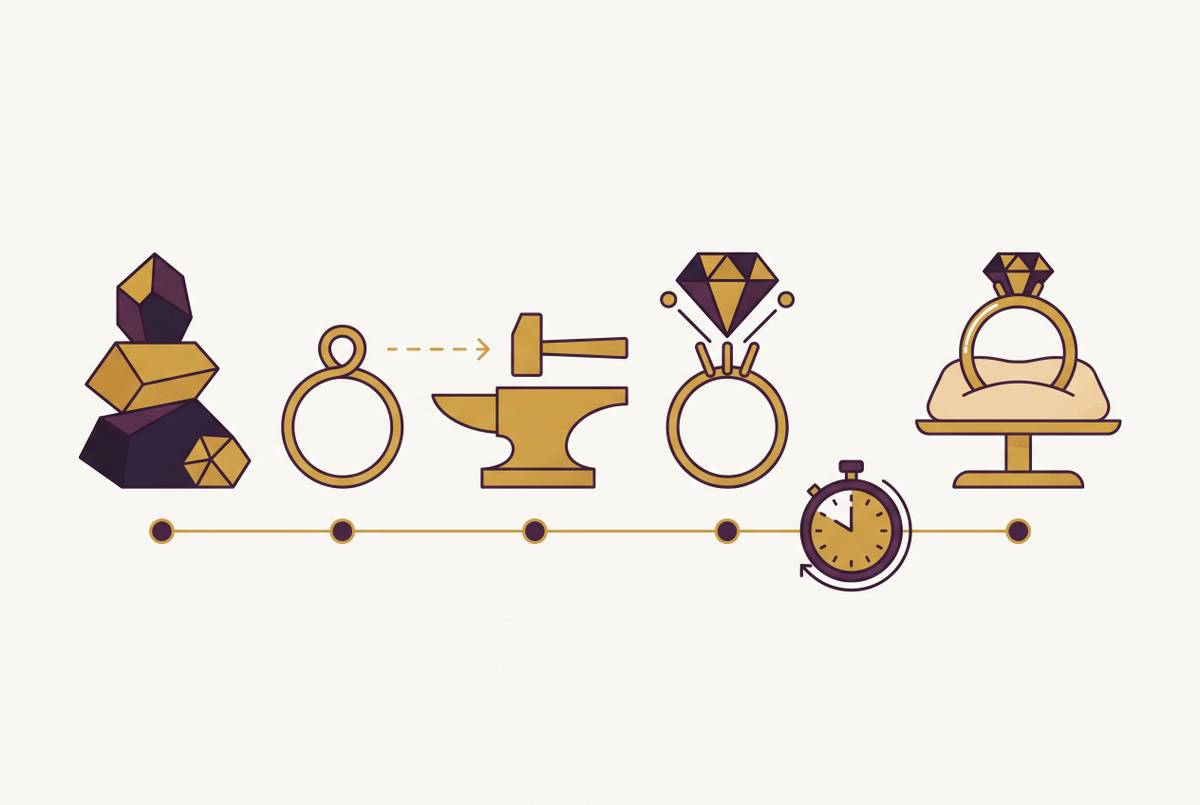
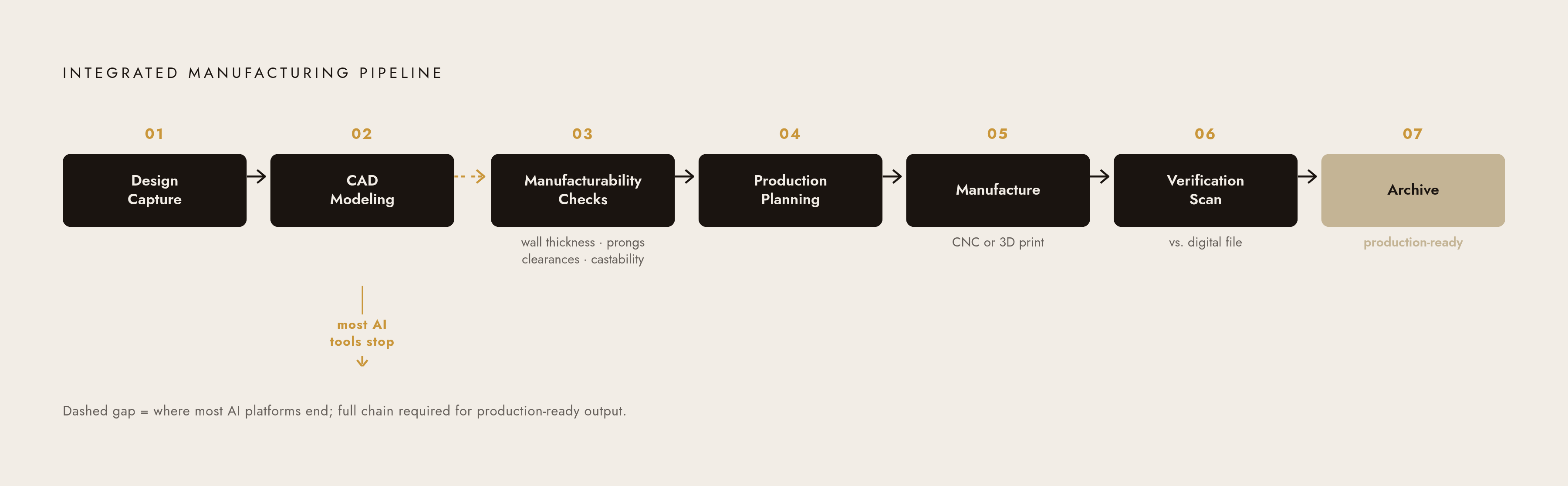
The integrated version of this pipeline runs something like: design capture, then CAD modeling with the manufacturing parameters built in, then automated manufacturability checks (wall thickness, prong strength, stone clearances, castability), then production planning, then actual manufacture via CNC or 3D printing, then a verification scan against the original digital file, then archive. 3D printing plays two roles here: printing wax or resin patterns for traditional lost-wax casting, or printing directly in precious metal. The 3D printed jewelry market alone is projected at $4.89 billion in 2026, up from $4.17 billion in 2025, which tells you this isn't a fringe technique anymore.
The speed difference, when this pipeline actually connects end to end, isn't subtle. A custom ring that traditionally takes two to four weeks can go from concept to a physical prototype in hours, which isn't an incremental improvement but a different category of business, and brands still quoting four-week turnarounds are competing against companies that no longer think in weeks.
How parametric design makes mass customization operationally viable
Parametric design is the quiet engine underneath all of this, and it's a simpler idea than the name suggests. Instead of designing one fixed ring, a designer builds a model with dials on it: finger size, stone size, halo width, metal type. Turn a dial and the design updates, with no restart, no redraw, and no waiting around for a revision.
A configurator is just the customer-facing window into that dial-covered model. The customer picks their preferences, and a 3D preview updates instantly, rotating, zooming, viewable from any angle, like they're holding the ring before it exists. Crucially, what comes out the other end isn't a rough approximation. It's a specific, manufacturable CAD file representing the exact geometry of what that customer just built. Materials, labor, and margin get calculated the second the configuration locks, which erases the slow back-and-forth quoting process that has made custom orders such a pain to service profitably.
This also fixes a problem the jewelry industry has quietly lived with for a long time. Standard designs got built around idealized proportions and, often, rigid gender conventions: one size, one shape, one assumed hand. Parametric design flexes a single design language across a much wider range of bodies and measurements. A brand can offer real range from a small library of parametric base models. The scale comes from the parameters, not from warehousing a thousand slightly different SKUs, and any brand still thinking in SKU count is solving the wrong problem.
None of this is theoretical infrastructure, either. Configurator platforms designed to integrate with existing e-commerce and enterprise systems are already operating in this exact space, and the white-label logic applies here too: a brand deploys one as its own storefront experience, and the engine underneath stays anonymous. The white-label logic applies here too: a brand deploys one of these as its own storefront experience, and the engine underneath stays anonymous.
What brands of different sizes actually get from a white-label AI platform
Independent designers and boutique studios get the most dramatic unlock, full stop. The core gain is access to production-ready design without hiring a CAD specialist or spending years learning the software personally. A designer can go from customer conversation to a finished, production-ready CAD design in minutes, present it on the spot, and take a deposit before the customer changes their mind. When design takes minutes instead of days, a small studio can quote and close in a single sitting, and building out a full design team stops being necessary, since the platform is the team.
Growing brands and multi-line retailers get something slightly different: consistency without dilution. Because the deployment is white-label, the configurator shows up as the brand's own product, with no co-branding to muddy the customer relationship. Leads get captured on the brand's own site, deposits get collected the moment a configuration locks, and a manufacturing brief gets generated automatically instead of typed up by hand. The custom order process turns from a one-off scramble into a repeatable workflow. Since these platforms tend to integrate with existing e-commerce stacks like Shopify and WooCommerce, adopting one doesn't mean ripping out the brand's whole technology stack and starting over.
Enterprise retailers and global brands are playing a different game entirely: scale and consistency across a massive catalog. At that size, the real value is that a parametric model produces the same manufacturing standard whether the order came from a flagship store in one country or a website in another. At that scale, the parametric model produces the same manufacturing standard whether the order came from a flagship store in one country or a website in another, turning the configurator into a consistent selling tool across every channel.
Across every tier, though, the outcome that actually matters to the customer is the same: what they see on the screen matches, exactly, what shows up in the box. That's the trust gap that's killed a lot of custom online jewelry before it even started. Close it, and the whole category gets easier to sell.
How to evaluate whether a white-label AI platform is genuinely production-ready
Five tests, in order of how fast they'll disqualify a bad platform.
First: does it output a CAD file or a picture? A render is a sales tool, while a CAD file is a manufacturing input. If a platform's final deliverable is an image, however photorealistic, it's a visualization product wearing a design platform's clothes. The file coming out the other end needs to encode actual manufacturing parameters, stone seat tolerances, wall thickness, prong geometry, not just an outline shape.
Second: is the customization parametric, or cosmetic? Swapping a stone color on a fixed template doesn't touch the underlying geometry and doesn't require a new CAD file; it's a coat of paint. Changing ring size, stone dimensions, or setting style changes the actual geometry and has to regenerate a valid, manufacturable file automatically. If a platform can't tell you which one it's doing, ask again, slower this time.
Third: where does validation happen? Even the AI tools GIA evaluated favorably still needed a qualified human to check final geometry before production. A platform worth using builds that checkpoint into the workflow instead of leaving the brand to arrange it separately, after the fact, probably under deadline pressure. Automated manufacturability checks, wall thickness, castability, stone clearances, should be a built-in output, not an afterthought bolted on because a customer complained about a broken prong.
Fourth: how does the white-label layer actually work, mechanically? Can the configurator sit inside the brand's existing website without a full rebuild, and does it talk to the e-commerce and supply chain systems already in place? One question brands skip too often: who owns the customer data and order history piling up, the brand or the platform? Get that answer in writing before signing anything.
Fifth: what's the manufacturing track record, not just the design portfolio? Speed from a customer's first idea to a first real design is a legitimate benchmark, not a marketing flourish, because it directly changes how many options a brand can put in front of a customer during one conversation. Going from concept to a first design in around five minutes is a real, testable claim. Ask, too, whether the platform's output has actually been run through real casting, not just rendered nicely for a case study.
The compounding advantage for brands that adopt this model now rather than later
The custom jewelry market isn't pausing for anyone to catch up. A segment growing at 16% a year doesn't wait politely while a brand spends eighteen months deciding whether to modernize. Competitors who deploy white-label AI infrastructure now will have design libraries, customer data, and a refined configurator experience already piling up by the time slower brands are ready to even launch theirs. That gap compounds; it doesn't stay flat, and it doesn't reverse just because a competitor finally shows up.
The convergence of AI design and 3D printing is also compressing timelines across the whole industry, not just for early movers. The direction is obvious even if the exact date isn't: a customer describes what they want in plain language, a production-ready CAD file gets generated, and the finished piece arrives in days instead of weeks. That capability already exists in pieces today, and it's becoming the baseline customer expectation rather than the impressive exception. Brands without it will feel the gap as a competitive disadvantage before they can even name what's causing it.
One more thing worth sitting with: the rules aren't fully written yet. GIA and other industry bodies have noted that governments and international standards groups are only starting to work out how AI-assisted creative design should be governed, from IP questions to disclosure. Brands moving now get to help shape what "standard practice" ends up meaning, instead of inheriting someone else's rulebook later. That's a quieter advantage than market share, but it's a real one, and it belongs to whoever shows up early.